
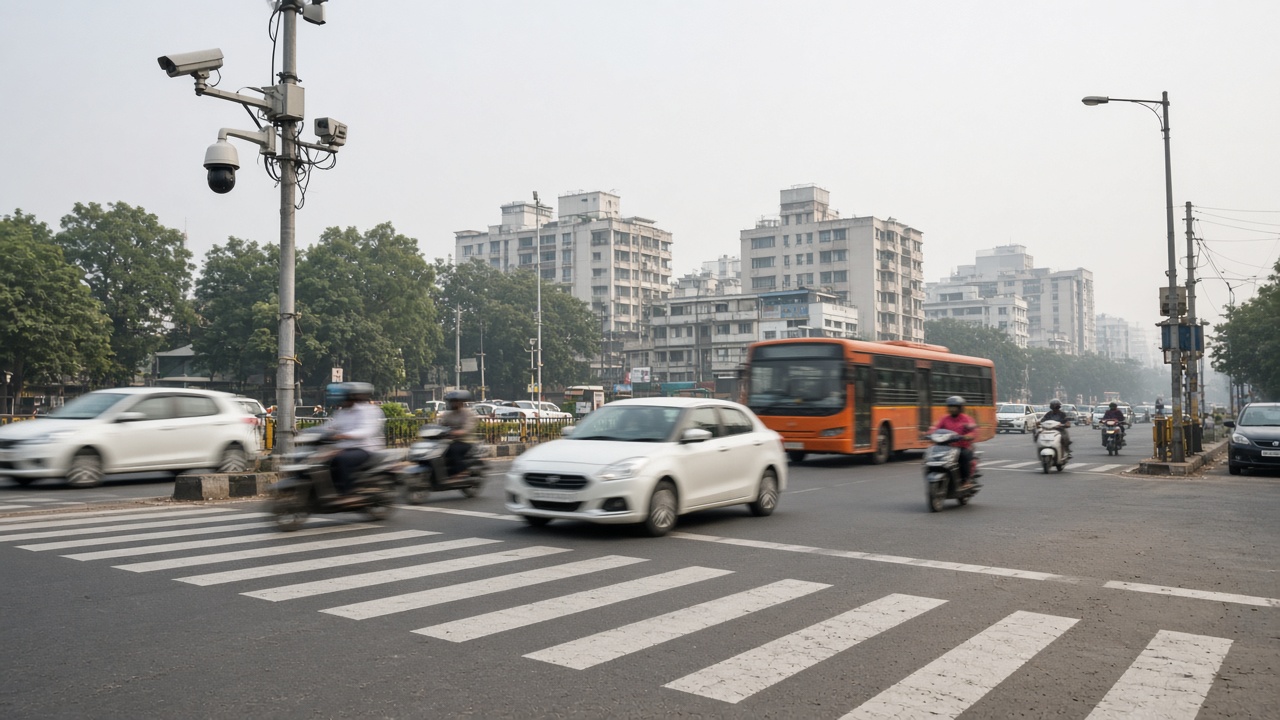
This is Cluster 8. This guide maps India's video analytics industry in plain language: company types, how to evaluate vendors, what "top 5 / best / largest" searches really mean, office and career patterns, market trends, and a Wikipedia-style overview you can use in RFPs and stakeholder briefings. It does not wire product FAQ cards into the page.
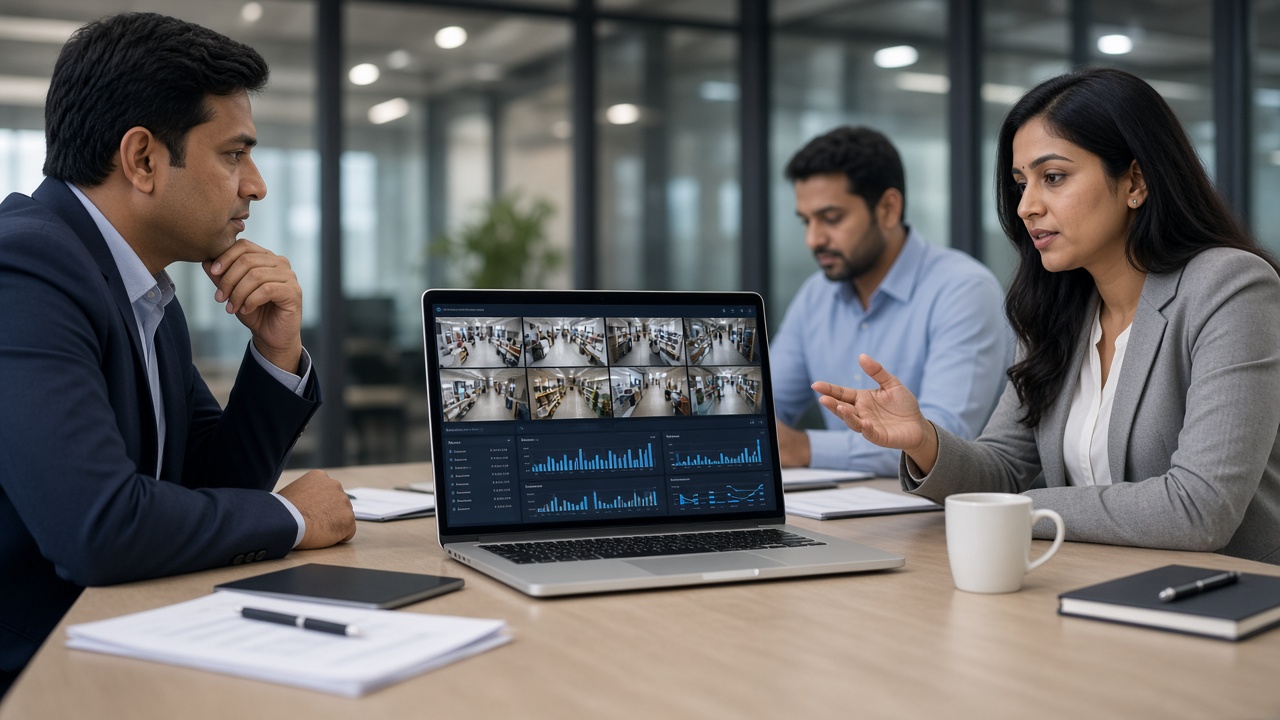
Industry snapshot at a glance
India's video analytics market sits at the intersection of CCTV growth, smart-city programs, industrial safety mandates, retail digitization, and bank/campus security modernization. Buyers range from municipal agencies to factories, malls, logistics parks, hospitals, and enterprises refreshing legacy NVRs with AI layers.
Wikipedia-style overview
Video analytics companies design software (and sometimes hardware) that analyzes video streams to detect objects, behaviors, and events. In India, the category grew alongside IP CCTV adoption and government smart-city investments. Offerings typically include object detection, intrusion and perimeter rules, people counting, PPE compliance, ANPR / vehicle analytics, queue and heatmap tools, and command-center dashboards.
Delivery models vary: pure software platforms that connect to existing cameras; appliance or edge kits; camera OEMs bundling onboard AI; and system integrators who assemble multi-vendor stacks. Buyers should separate camera manufacturing scale from analytics software maturity. A large CCTV brand may excel at hardware distribution while a smaller AI specialist may outperform on a specific use case such as industrial PPE or traffic violations.
Procurement usually runs through PoCs (proofs of concept), accuracy trials on site video, cybersecurity questionnaires, and integration checks with VMS, access control, or e-challan / ERP systems. Privacy and data-protection expectations are rising, especially where faces, plates, or workplace monitoring are involved.
What does a video analytics company do?
At minimum, it ingests camera streams, runs AI models, creates events, and presents alerts or reports. Mature companies also provide calibration tools, user roles, audit logs, multi-site tenancy, health monitoring of streams, and professional services for site surveys. Some specialize narrowly (only ANPR, only retail heatmaps). Others offer a broad suite across security, safety, and operations.
Many Indian deployments still begin with "we already have cameras." The valuable company is often the one that can make existing infrastructure useful - not only sell new hardware. Ask how they handle mixed camera brands, low-light sites, and intermittent networks common outside metro cores.
Company types in the India landscape
Understanding types prevents unfair comparisons. A global camera OEM, a domestic AI platform, and a regional system integrator can all claim "video analytics" while selling different things.
Demand drivers include smart-city command centers, highway and city traffic enforcement, factory EHS programs, warehouse throughput, mall footfall analytics, and enterprise SOC modernization. Each driver favors a slightly different vendor profile.
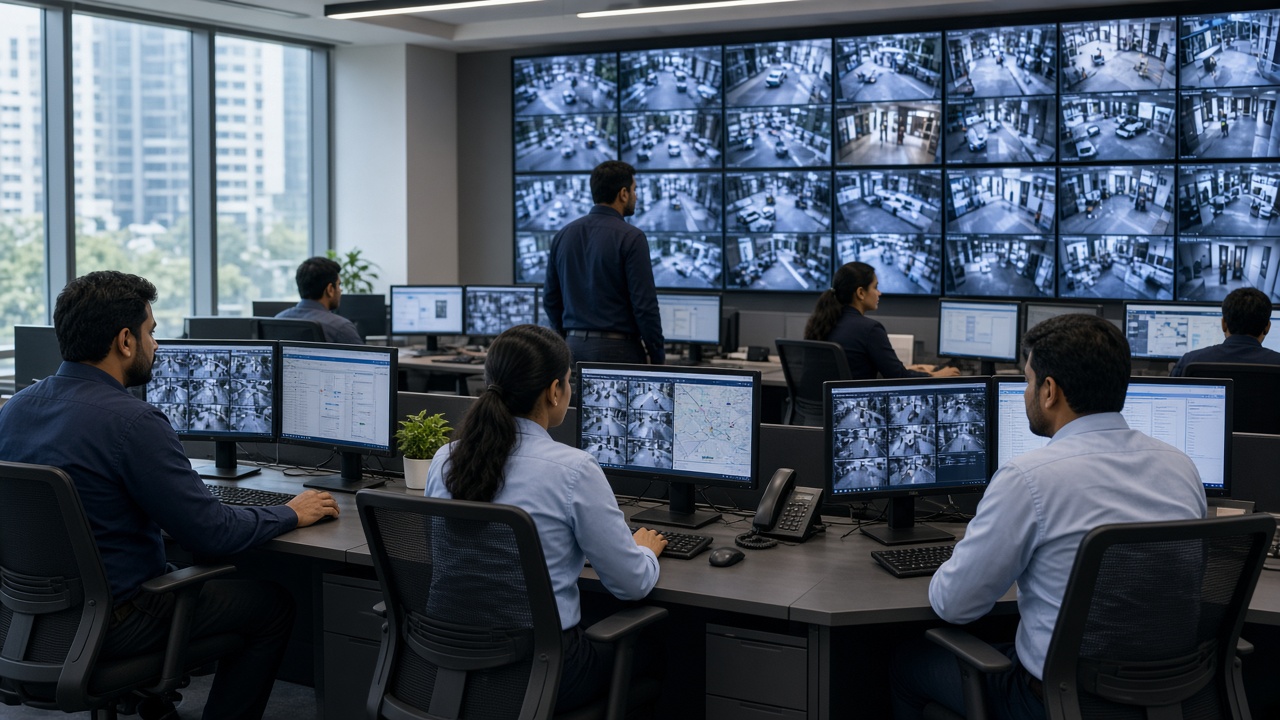
How to evaluate vendors (and "who is best?")
There is no single best company for everyone. "Best" is the vendor that meets your accuracy bar on your cameras, fits your workflows, integrates cleanly, supports your language and SLAs, and respects privacy constraints. Brochure accuracy is not site accuracy.
Ask for reference deployments in your industry. Visit a live site if possible. Require a written PoC scorecard: precision/recall proxies in simple language, operator feedback, and infrastructure needs. Prefer vendors who talk honestly about failure modes (rain, glare, crowded frames) over those who promise perfection.
"Top 5", "best", and ranking searches - how to read them
Search results titled "top 5 video analytics companies in India" are starting points, not procurement decisions. Lists often mix camera OEMs, pure AI firms, and integrators. Ranking criteria are rarely transparent. Treat them as a longlist generator, then apply your evaluation checklist.
Similarly, "best video analytics company" depends on whether you need city-scale traffic, a single plant's PPE compliance, or multi-brand retail heatmaps. A top traffic vendor may be average at queue analytics. Score by use case columns, not by a single trophy number.
"Largest CCTV company" vs analytics leaders
People often ask which is India's largest CCTV company when they actually need analytics outcomes. Hardware shipment leadership can matter for spare parts and installer networks. It does not automatically mean best AI accuracy, best false-alarm control, or best software UX. Many successful projects pair existing cameras (any major brand) with a strong analytics platform and a capable integrator.
Framing for stakeholders: buy cameras for coverage and image quality; buy analytics for decisions; buy integration for uptime. Optimize each layer. If one vendor offers all three, still evaluate each layer on its merits.
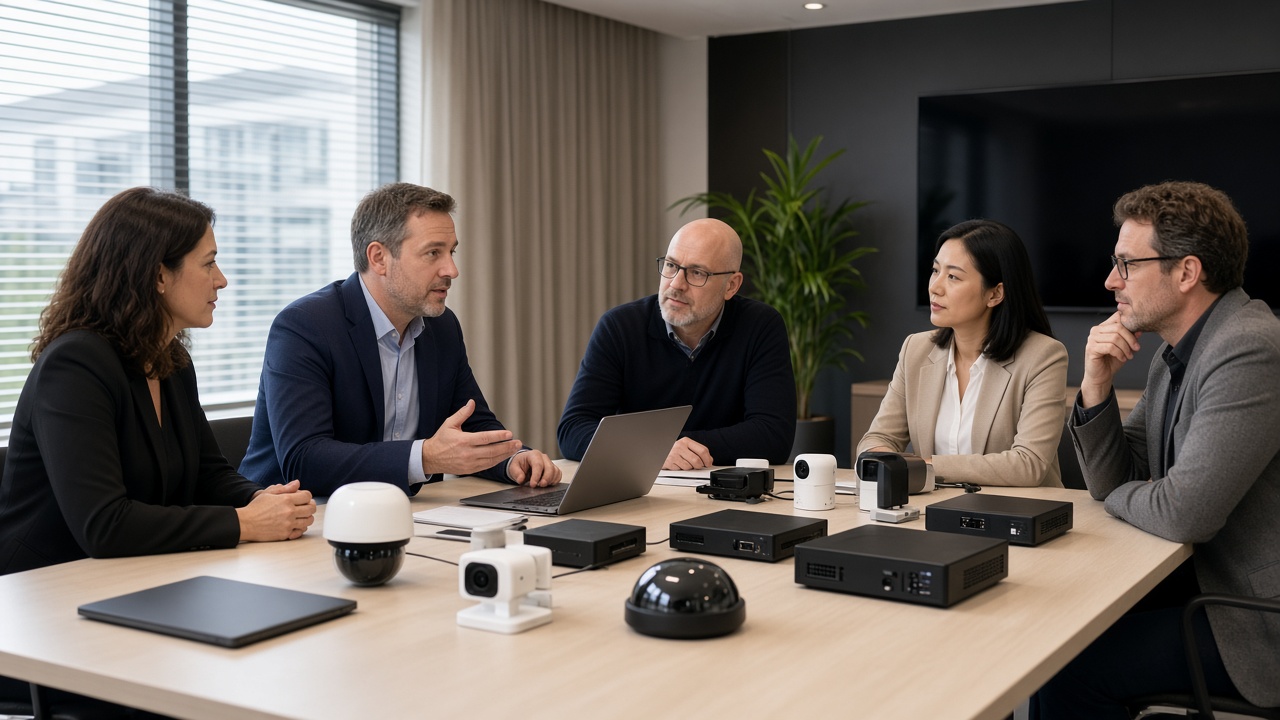
Offices and geographic pattern
Product and R&D teams commonly cluster in Bengaluru, Hyderabad, Chennai, Pune, and parts of Delhi NCR and Mumbai. Field teams and integrator partners sit closer to project sites nationwide. For buyers, ask where your support engineer will be - not only where the HQ press release lists an address. For candidates, expect hybrid roles that mix office model work with site visits.
Careers in India's video analytics ecosystem
Hiring spans computer vision engineers, MLOps, backend/platform engineers, solution engineers, pre-sales consultants, technical project managers, and SOC analysts who learn to tune rules. Domain specialists (traffic, industrial safety, retail ops) are valuable because they translate SOPs into detection logic.
Portfolios that win interviews show measured PoCs: before/after false alarm rates, camera placement notes, and a clear statement of limitations. Certificates help less than a documented project on imperfect video.
Market trends to watch
Edge and hybrid architectures grow where bandwidth is limited. Vertical solution packs (PPE, ANPR, perimeter) outsell generic "AI CCTV" pitches. Buyers ask harder questions about DPDP-aligned handling, role-based access, and on-prem options. Integrators remain central because cameras, networks, and change management still make or break projects. Open interfaces and VMS partnerships matter more as estates become multi-vendor.
Writing an RFP / PoC brief that vendors can answer
Vague RFPs attract vague proposals. Write the operational outcome first: “Detect persons entering Zone B after 20:00 with evidence clips for SOC review.” List camera counts, existing VMS, network constraints, languages for UI, and whether on-prem is mandatory. Ask vendors to price licenses, hardware appliances, professional services, and annual support separately.
Include a PoC scorecard in the RFP itself: false alarm tolerance, required detection classes, night performance expectations, and a one-week soak test. Require sample alert payloads and API docs. Ask for two references in a similar industry. This filters brochure-only sellers early.
How Indian buyers usually run PoCs
Typical pattern: shortlist 2–3 vendors, connect 4–10 cameras, run 7–14 days, hold a joint review with security/ops and IT. Strong buyers freeze the camera list and rules mid-PoC so comparisons stay fair. Weak buyers keep moving goalposts and then claim “nobody worked.”
Collect operator diaries. A system with slightly lower lab scores but far less noise may win because humans will actually use it. Also test failure behavior: what happens when RTSP drops? Does the health dashboard notice?
Why system integrators still matter
Even excellent AI software fails on bad networks, wrong lenses, and untrained guards. Integrators bridge civil works, cabling, switch configs, camera aiming, and SOP training. In India, many government and enterprise tenders effectively require an SI plus OEM/platform partnership. Evaluate the SI’s maintenance capacity as carefully as the AI demo.
Ask who owns the first thirty days after go-live. Tunings, false alarm reviews, and shift handovers decide whether the project becomes a shelf-ware dashboard or a living system.
Public sector and smart-city notes
City and highway projects add tender rules, security audits, and multi-year SLAs. Analytics may feed ITMS, command centers, and enforcement workflows. Evidence integrity, time sync, and camera identity metadata become critical. Vendors without public-sector delivery experience can still win if paired with a strong SI — but clarify roles in writing.
Private enterprises move faster but still need cybersecurity questionnaires. Banks and hospitals often demand stricter data controls than factories. Match vendor experience to your regulated reality.
Buyer mistakes that waste a year
- Buying only on price per channel.
- Skipping night tests.
- Enabling twenty analytics packs on day one.
- Ignoring operator UX.
- Assuming “largest CCTV brand” equals best AI.
- Failing to budget for tuning services.
- Not defining who owns false-alarm triage.
Avoid these and your shortlist process will feel calmer and fairer.
Pricing and licensing patterns (plain English)
Vendors price per camera channel, per analytics pack, per site, or as a platform subscription with tiered channel bundles. Appliances may be CapEx; cloud may be OpEx. Beware “cheap per channel” quotes that hide GPU servers, storage, or mandatory professional services. Ask for a three-year total cost view including AMC, model updates, and training.
For multi-site groups, negotiate central platform fees separately from per-plant edge licenses. Clarify what happens when you temporarily disable a camera — do licenses float? Can you burst for events? Procurement teams should involve IT early so surprise infrastructure costs do not appear after vendor selection.
How competition usually differentiates
Indian and global players differentiate on vertical depth, VMS partnerships, on-prem strength, language support, public-sector references, and speed of custom rule development. Some win on retail heatmaps; others on traffic ANPR accuracy for Indian plates; others on industrial PPE under difficult lighting. Your scorecard should weight the differentiators that match your risk, not a generic feature bingo card.
Startup vendors may innovate faster but need proof of support coverage. Large OEMs may offer distribution muscle but slower analytics iteration. Hybrid buying — OEM cameras + specialist AI platform + local SI — is common and rational when contracts define interfaces clearly.
How to brief leadership without hype
Executives need risk, cost, and outcome. Translate vendor talks into clear points:
- Problem today
- PoC evidence
- Residual false-alarm rate
- Staffing impact
- Three-year cost
- And privacy posture
Avoid AI mystique. Show one annotated false alarm and one true catch — leadership trusts balanced evidence. Mention Cluster 9 checker methods so accuracy claims have a method, not a slogan.
Twenty sharp questions to ask any vendor
- Which use cases are you strongest in?
- Show false alarms from a real site.
- Where does inference run?
- How do model updates roll out?
- What VMS versions are certified?
- How are Indian number plates handled if ANPR matters?
- What is the support SLA in my city?
- Who tunes zones after go-live?
- How are roles and audit logs implemented?
- Can we keep data on-prem?
- What is retained, and for how long by default?
- How do you handle RTSP instability?
- What GPU/CPU sizing worksheet do you use?
- Can licenses float across cameras?
- What does a failed PoC look like — will you say no?
- Provide two references we can call.
- How do you train our operators?
- What open APIs exist?
- How do you price professional services?
- What is explicitly out of scope?
Vendors who welcome these questions are usually easier partners than those who dodge them with slides. Write answers into your comparison sheet the same day while details are fresh. Share the sheet with IT and security so evaluations stay multi-disciplinary.
If a salesperson promises “zero false alarms,” treat that as a red flag. Real systems manage false alarms; they do not abolish physics and foliage.
Partner ecosystem: OEMs, cloud, and startups
Many “companies in India” operate as part of ecosystems. A platform vendor partners with camera OEMs for validated models, with hyperscalers for cloud regions, and with regional SIs for delivery. When you evaluate, ask who actually staffs your ticket queue at 2 am. The logo on the slide may differ from the engineer on the call.
Startup analytics firms sometimes white-label through larger SIs. That can be good if quality is high and support is contracted. It can be bad if accountability is unclear. Put escalation matrices in the MSA. For global vendors entering India, insist on local reference sites and spare-parts / appliance logistics timelines before you bet a multi-city rollout.
Keep an internal map of who does what: OEM, AI vendor, SI, network contractor, and your own SOC. Update it when partners change. Ecosystem clarity prevents finger-pointing when a stream fails at a critical gate.
Summary
- India's video analytics industry is a mix of platforms, specialists, OEMs, integrators, and global players.
- Use Wikipedia-style context to brief stakeholders, then evaluate with a PoC on your video.
- Treat "top 5" and "largest CCTV company" searches as longlists, not answers.
- Hire and partner for the skills that keep systems accurate after go-live.
- Trends favor hybrid deployment, vertical outcomes, and stronger privacy practice - the same themes that separate brochure vendors from operational partners.