
How many vehicles are moving through a location?
Overview
From Traffic Cameras to Traffic Intelligence
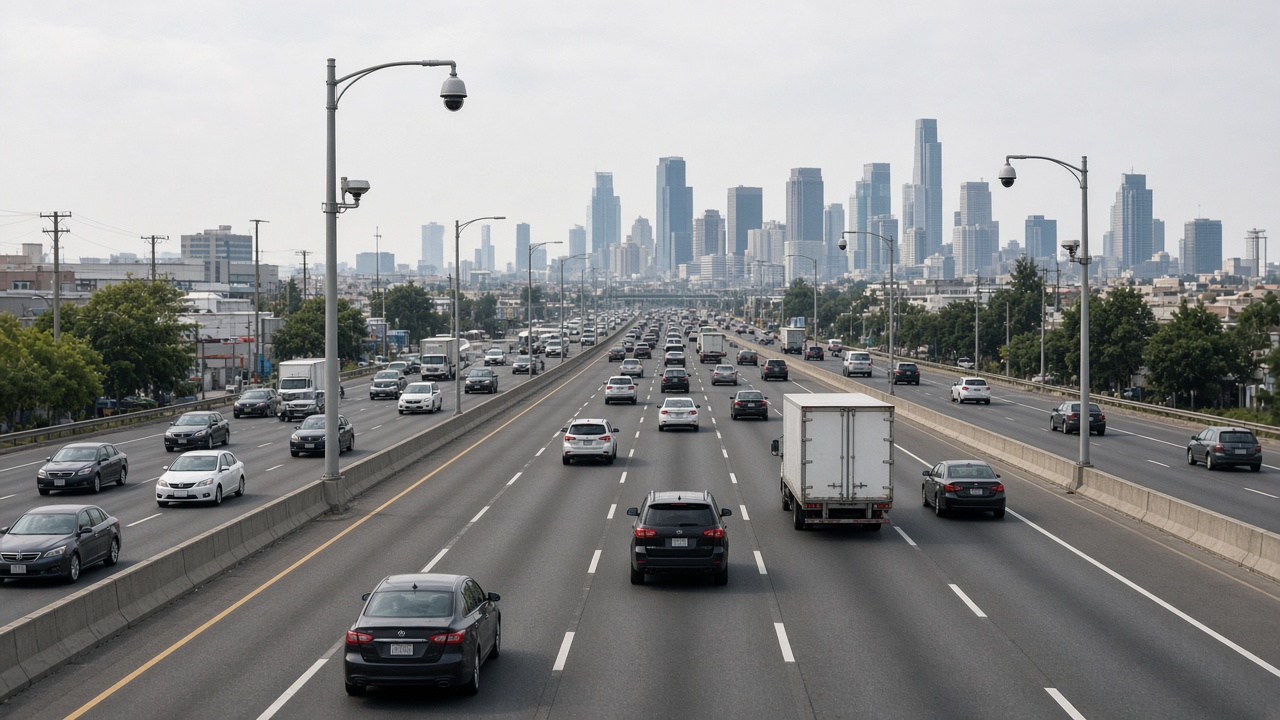
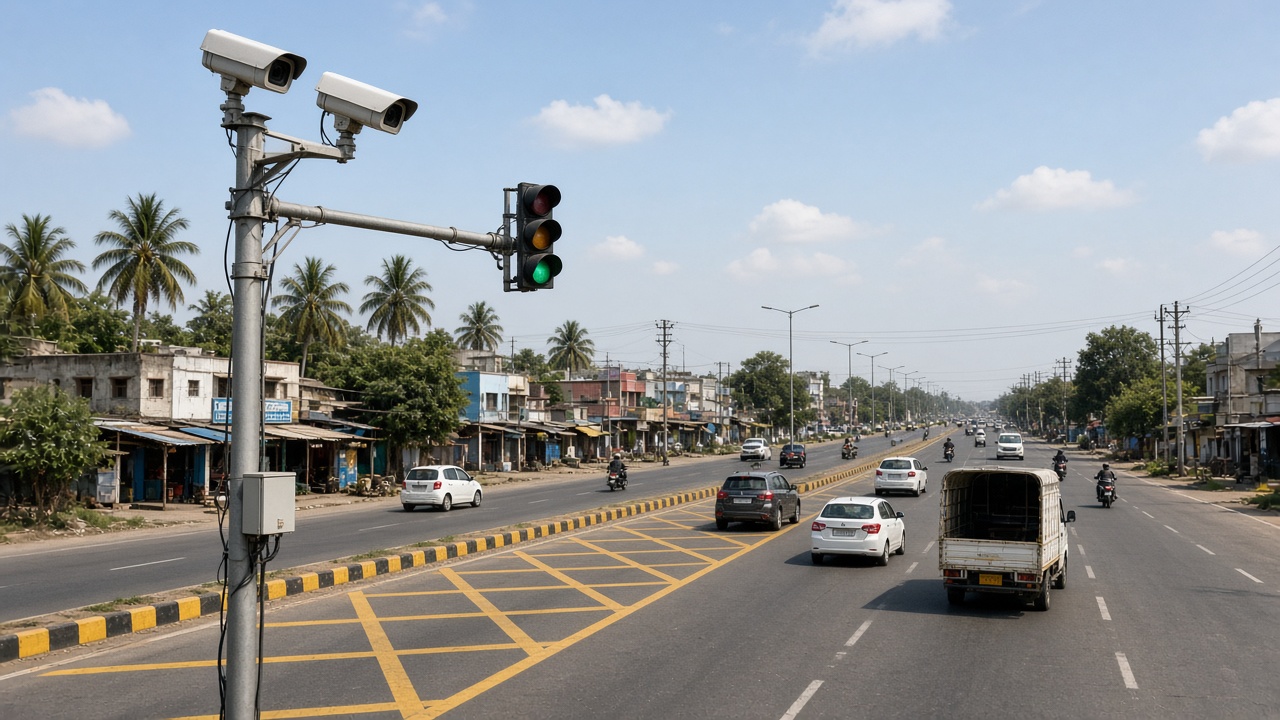
Modern roads generate enormous volumes of visual and operational data. The challenge is not simply to install more cameras—it is to turn traffic video into intelligence that supports timely decisions and enforcement workflows.
Cameras capture vehicles. Traffic moves continuously. Violations happen in seconds. Operators cannot manually observe every camera at every moment.
TruSight adds an AI intelligence layer to traffic surveillance infrastructure.
Step 01 of 06
Camera
Capture traffic activity from roadside and junction cameras.
Platform
What Is TruSight?
An Intelligent Traffic Management Platform Built Around Real-World Traffic Operations
TruSight is designed to bring together multiple components of modern traffic management into a unified technology environment. Depending on project requirements, TruSight can incorporate:
AI Video Analytics
Automatic Number Plate Recognition
Vehicle Detection
Vehicle Classification
Vehicle Tracking
Traffic Violation Detection
Speed Monitoring
Section-Speed Monitoring
Blacklisted Vehicle Detection
Evidence Capture
Centralized Monitoring
Traffic Event Management
Alerts & Notifications
e-Challan Integration
API Integration
Historical Traffic Data
Command Centre Monitoring
The exact capabilities, cameras, sensors, integrations and enforcement workflows are configured according to the deployment environment and project requirements.
Why ITMS
Why Intelligent Traffic Management Matters
Traffic management is increasingly becoming a technology and data problem. A modern traffic system may need to answer questions such as:
Which vehicles are entering or leaving?
Is a vehicle exceeding a configured speed threshold?
Has a defined traffic violation occurred?
Is a vehicle on a watchlist?
Where and when did the event occur?
What visual evidence is available?
Does the event require operator attention?
Can the event be passed into an authorized digital enforcement workflow?
TruSight is designed around these operational questions. Rather than treating every camera as an isolated video source, the platform creates a structured intelligence layer across traffic infrastructure.
Capabilities
Core TruSight Capabilities
Ten capability areas that turn roadside video into structured traffic intelligence and operational workflows.
01
AI Video Analytics
Computer vision for traffic video
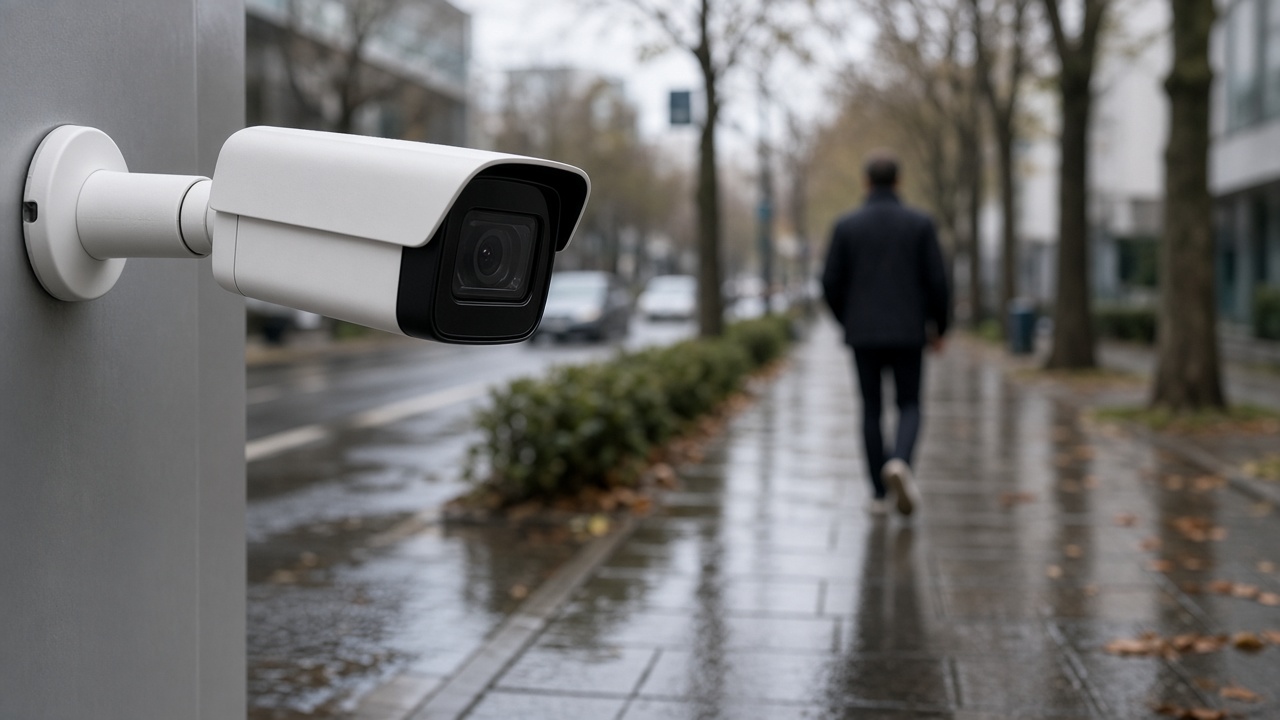
TruSight uses computer vision and AI-based video analytics to analyse traffic video. Depending on configuration, the platform can identify:
- Vehicles
- Vehicle movement
- Traffic events
- People
- Defined traffic violations
- Objects and conditions
- Vehicle behaviour
This enables traffic authorities to move from passive surveillance toward event-driven monitoring.
02
AI-Powered ANPR
Automatic Number Plate Recognition
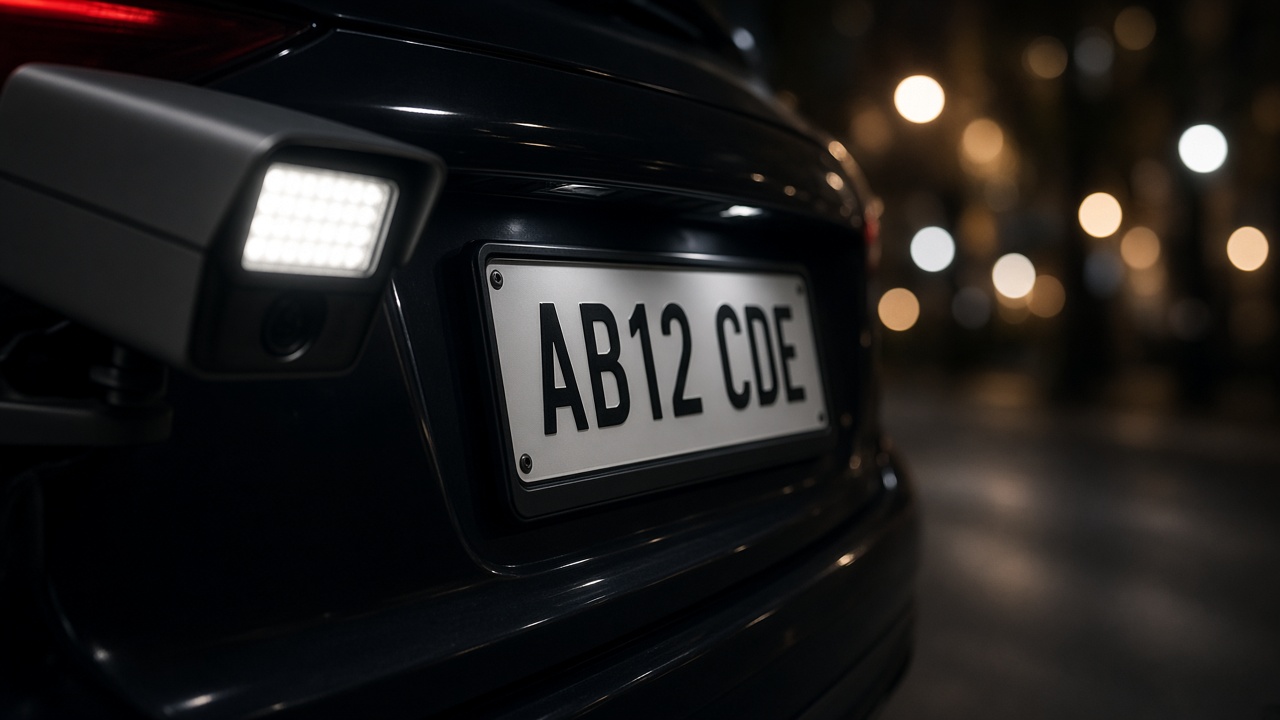
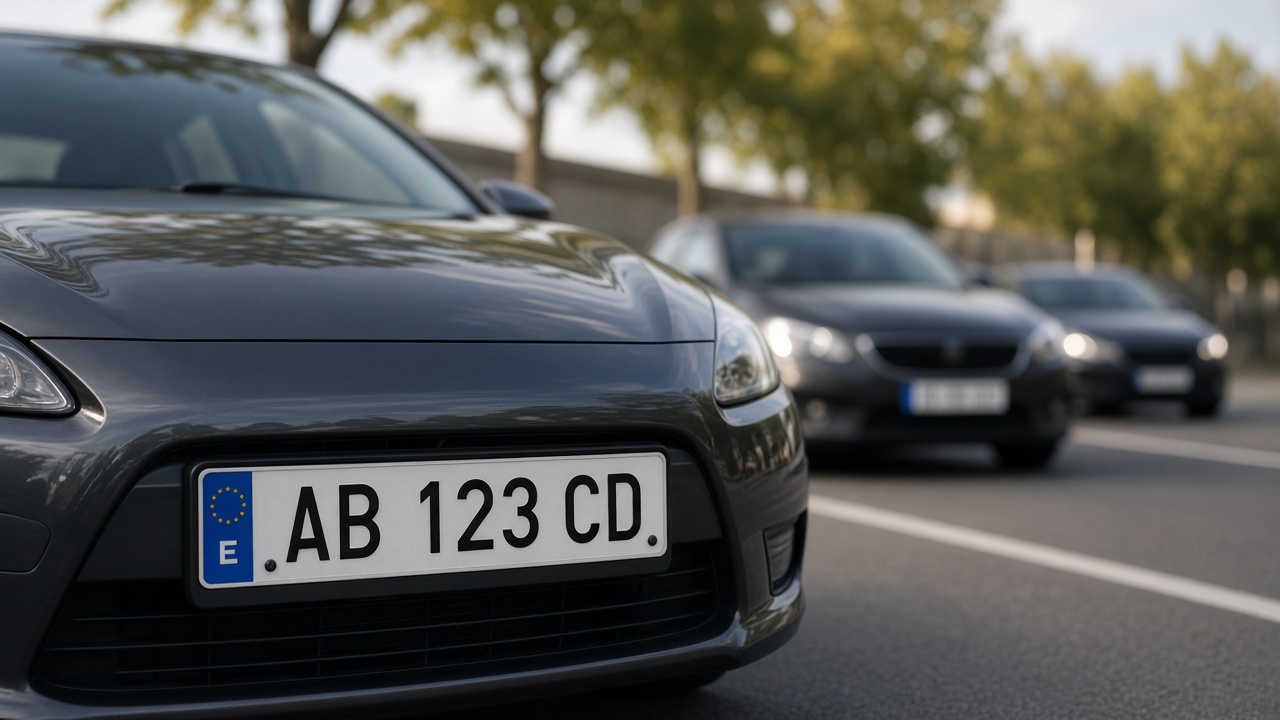
Automatic Number Plate Recognition enables the system to identify and read vehicle registration plates from suitable video streams. ANPR can provide the vehicle identity required to associate traffic events with specific vehicles—not simply as a standalone plate-reading function, but as part of a larger traffic intelligence workflow.
VEHICLE DETECTION
PLATE DETECTION
OCR / RECOGNITION
VEHICLE EVENT
EVIDENCE
WORKFLOW
03
Traffic Violation Detection
Configured events with visual association
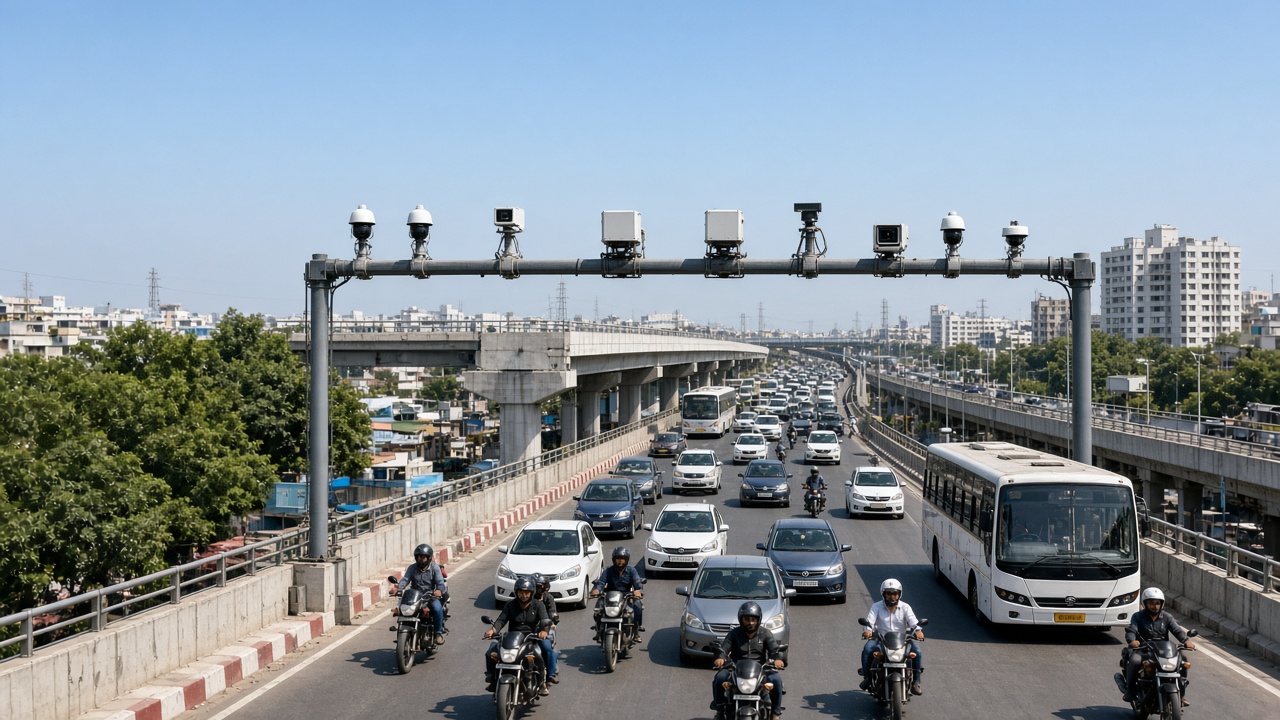
TruSight can be configured for defined traffic violations depending on camera position, image quality, road geometry, lighting and project requirements. Potential applications include:
- Helmet Violation
- Triple Riding
- Seat Belt Violation
- Wrong-Way Movement
- Lane-Related Violations
- Vehicle-Related Violations
- Other Configured Traffic Events
Actual violation types supported at a particular site depend on the deployed configuration and camera suitability.
04
Speed Intelligence
Point-based and section-speed approaches
Speed monitoring can be implemented using different technical approaches depending on the road environment and project requirements.
Point-Based Speed Detection
Vehicle speed can be measured at a specific detection point using appropriate speed-detection equipment.
Section-Speed Monitoring
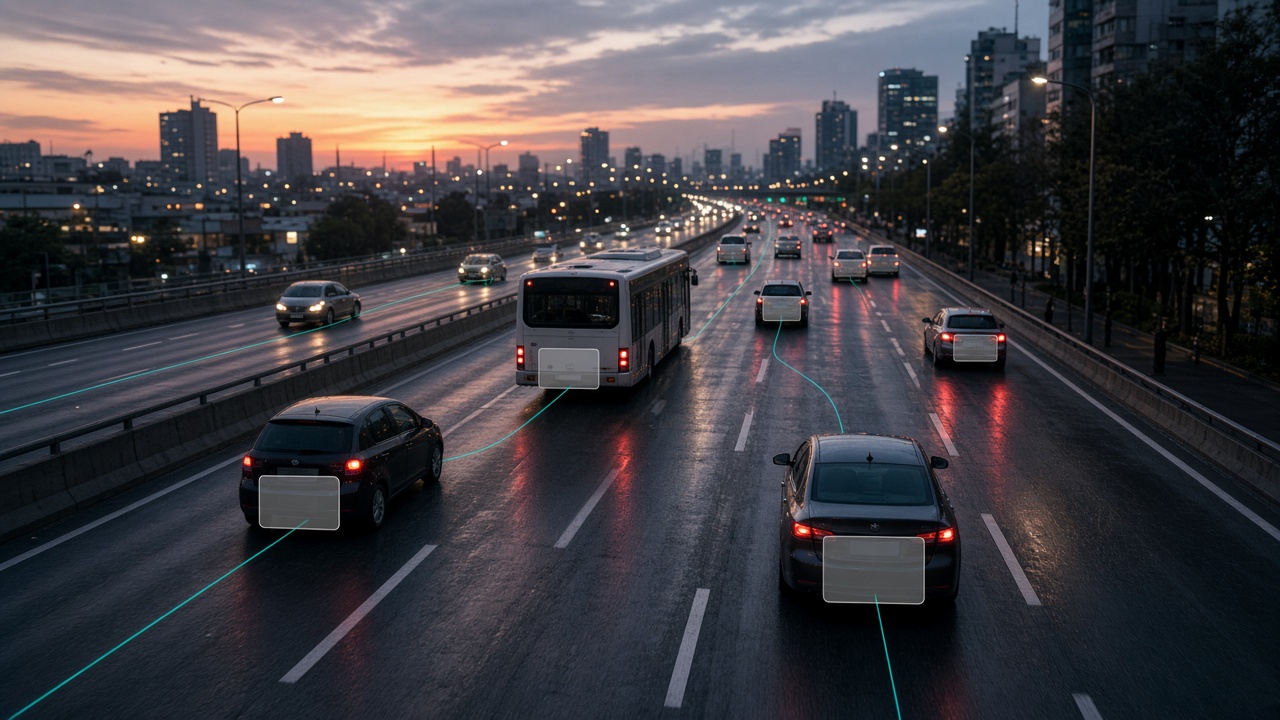
A vehicle is observed at two known locations; average speed is calculated from distance and travel time, then compared against the configured threshold.
Section-Speed Formula
Point AVehicle at Time A
DistanceKnown road length
Point BVehicle at Time B
Average SpeedDistance ÷ Travel Time
05
Vehicle Intelligence
Structured, searchable vehicle information
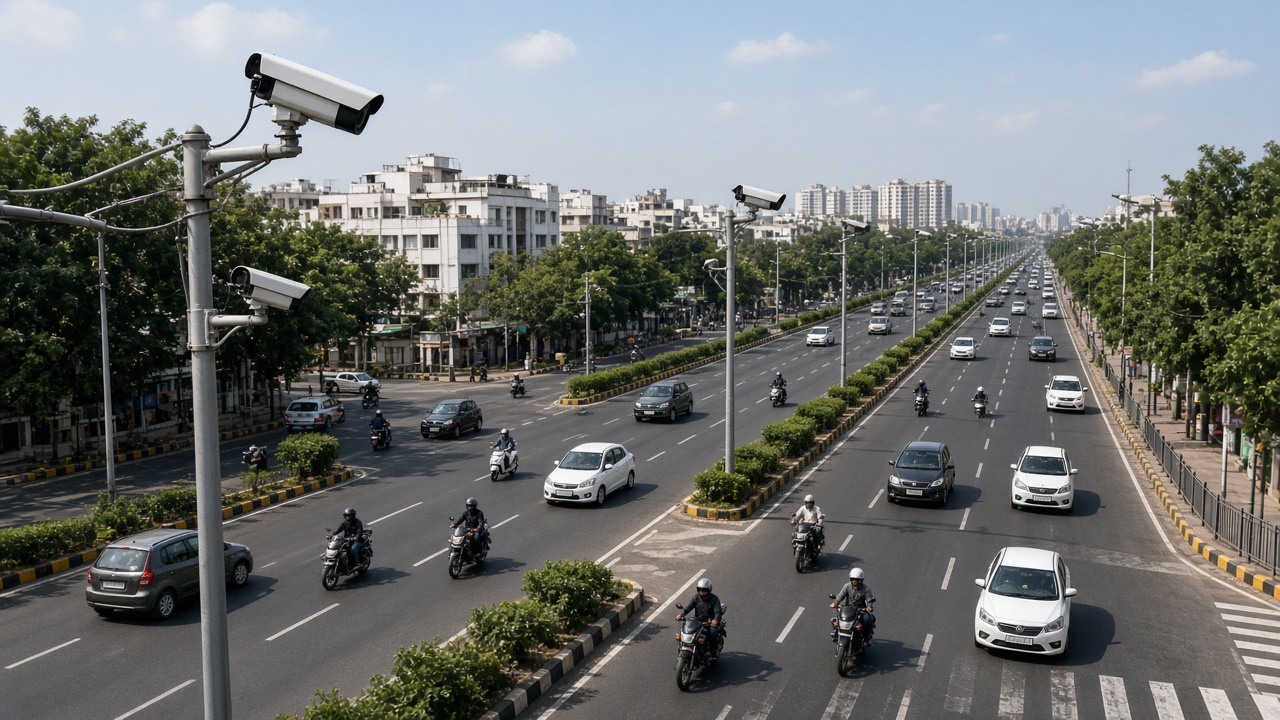
TruSight can turn individual vehicle detections into structured traffic information. Depending on configuration, this can include:
- Vehicle Identification
- Vehicle Classification
- Number Plate
- Direction of Movement
- Time of Detection
- Location
- Lane / Zone
- Associated Event
- Evidence Images
- Video Clips
This creates a searchable layer of vehicle intelligence rather than simply storing unstructured video.
06
Blacklisted & Watchlist Vehicles
Authorized list matching and alerts
TruSight can be configured to compare recognized vehicle numbers against authorized watchlists. When a matching vehicle is detected, the system can generate an event or alert for operator attention.
- Blacklisted Vehicles
- Stolen Vehicle Watchlists
- Authorized / Unauthorized Vehicle Lists
- Restricted Vehicle Access
- Security Watchlists
The actual watchlist workflow depends on the authority, database and integration available for the deployment.
07
Evidence Management
Events that can be reviewed and understood
Traffic intelligence becomes useful when an event can be reviewed and understood. TruSight can associate traffic events with relevant evidence such as:
- Vehicle image
- Number plate image
- Timestamp
- Location
- Camera
- Detected event
- Vehicle information
- Video evidence, where configured
Evidence requirements, retention periods and legal admissibility should always be determined according to the applicable authority, project specification and enforcement requirements.
08
e-Challan Integration
Authorized enforcement system workflows
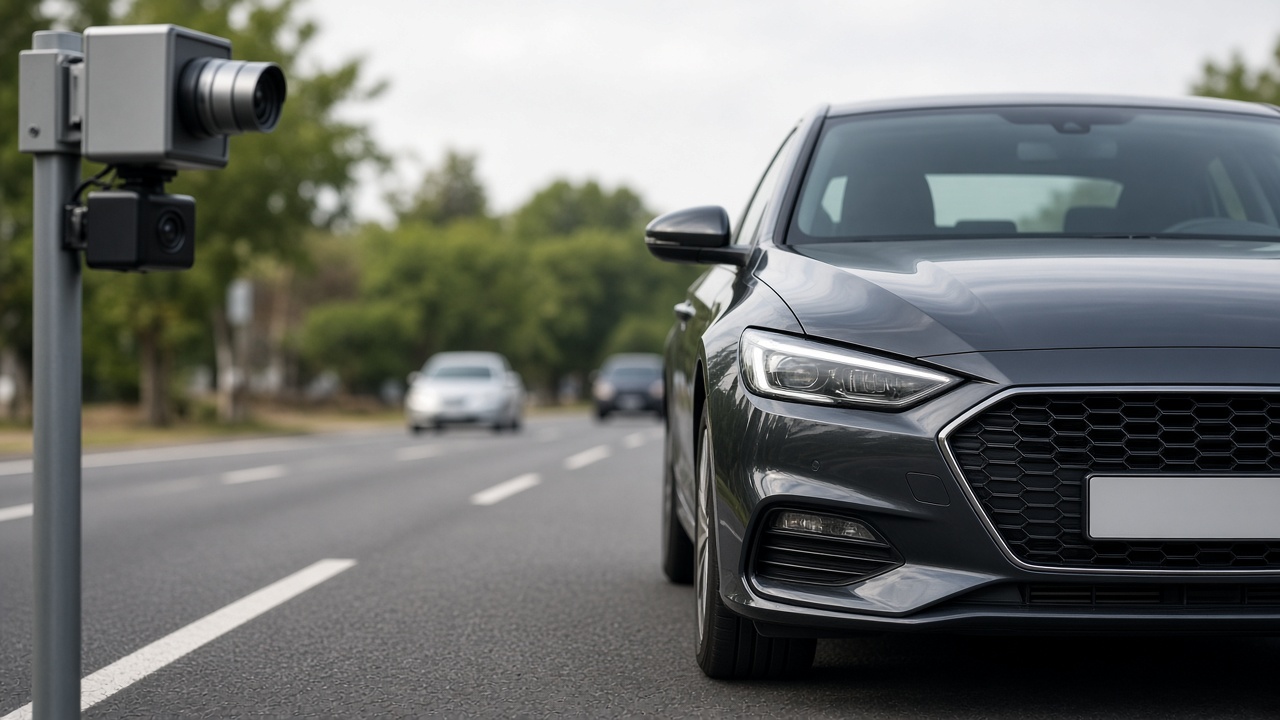
TruSight can integrate with authorized e-Challan or enforcement systems through appropriate APIs and workflows. India's eChallan platform is a digital traffic/transport enforcement system operated under MoRTH/NIC, and official government material describes ITMS integration with technologies including CCTV, ANPR, speed detection and violation-detection systems.
Step 01 of 07
Vehicle Detection
Capture and identify the vehicle of interest from suitable roadside or junction video.
TruSight's role is to provide the traffic intelligence, event and integration layer. Issuance of a legally valid challan remains subject to the authorized enforcement system, authority and applicable procedures.
09
Centralized Traffic Monitoring
One view across multiple traffic locations
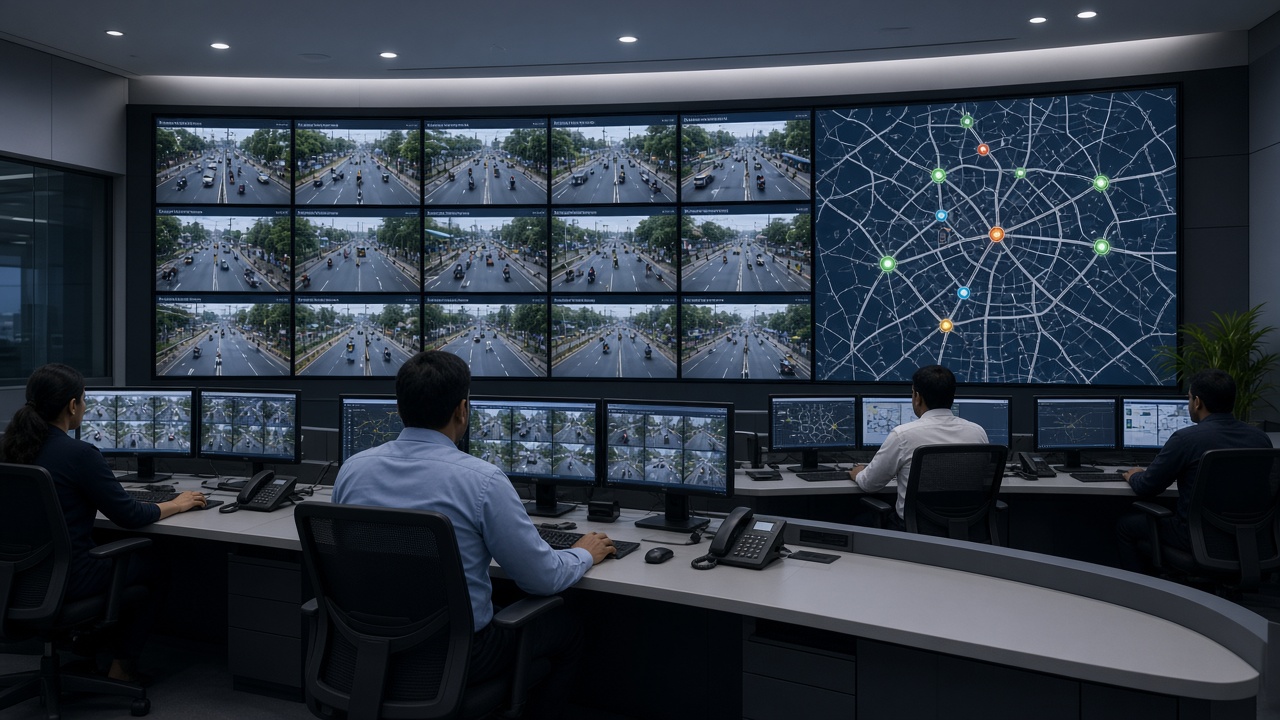
Traffic infrastructure is often distributed across multiple junctions, roads, corridors or highway locations. TruSight can bring these locations into a centralized monitoring environment. Operators can view:
- Live camera feeds
- Traffic events
- Violations
- ANPR events
- Alerts
- Camera status
- Location information
- Historical events
This enables traffic authorities to move from isolated camera monitoring toward centralized traffic intelligence.
10
Event-Driven Traffic Surveillance
Focus operators on what needs attention
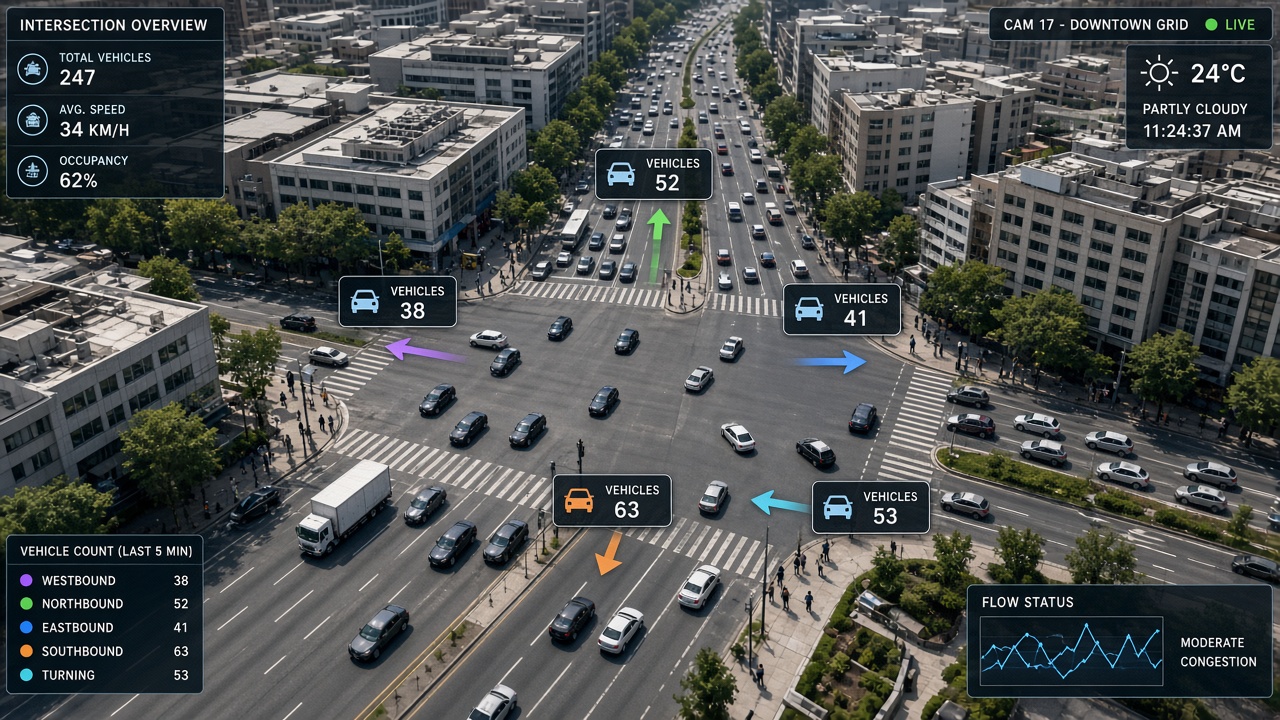
Traditional surveillance often requires operators to continuously watch video feeds. TruSight changes the operating model: instead of watching everything, let the system identify what needs attention.
Traffic Camera
AI Event
Evidence
Notification
Operator Review
Human operators focus on meaningful events rather than attempting to observe every frame of every camera.
Architecture
TruSight Architecture
From Roadside Infrastructure to Central Intelligence—adaptable to camera count, connectivity, processing requirements and project scope.
1
Traffic Cameras
Roadside, junction and corridor video sources.
2
Edge / Local Processing
Field-side compute closer to the camera where appropriate.
3
AI Video Analytics
Computer vision detection and event generation.
4
Vehicle & Event Intelligence
Structured vehicle and traffic event understanding.
5
ANPR / Speed / Violation Modules
- ANPR
- Speed
- Violations
6
Event & Evidence Management
Associate visual evidence with operational events.
7
Central Platform
Unified TruSight core for monitoring and workflows.
8
Command Centre
Operational visibility and operator response.
9
APIs / e-Challan / External Systems
- APIs
- e-Challan
- Integrations
Deployment
Edge, Centralized and Hybrid Deployment
TruSight can be architected around different processing models to match connectivity, latency and operational control needs.
Edge Processing
AI processing closer to the camera or field location where appropriate.
- Reduced bandwidth requirements
- Faster event generation
- Local processing
- Greater resilience in certain connectivity environments
Centralized Processing
Video and events processed through centralized infrastructure.
- Central command centres
- Multi-location monitoring
- Centralized analytics
- Unified event management
Hybrid Architecture
A combination of edge and centralized processing for field responsiveness and central visibility.
- Roadside Cameras
- Edge Intelligence
- Central TruSight Platform
- Command Centre
Roadside Cameras
Edge Intelligence
Central TruSight
Command Centre
Command & Control
Traffic Command & Control
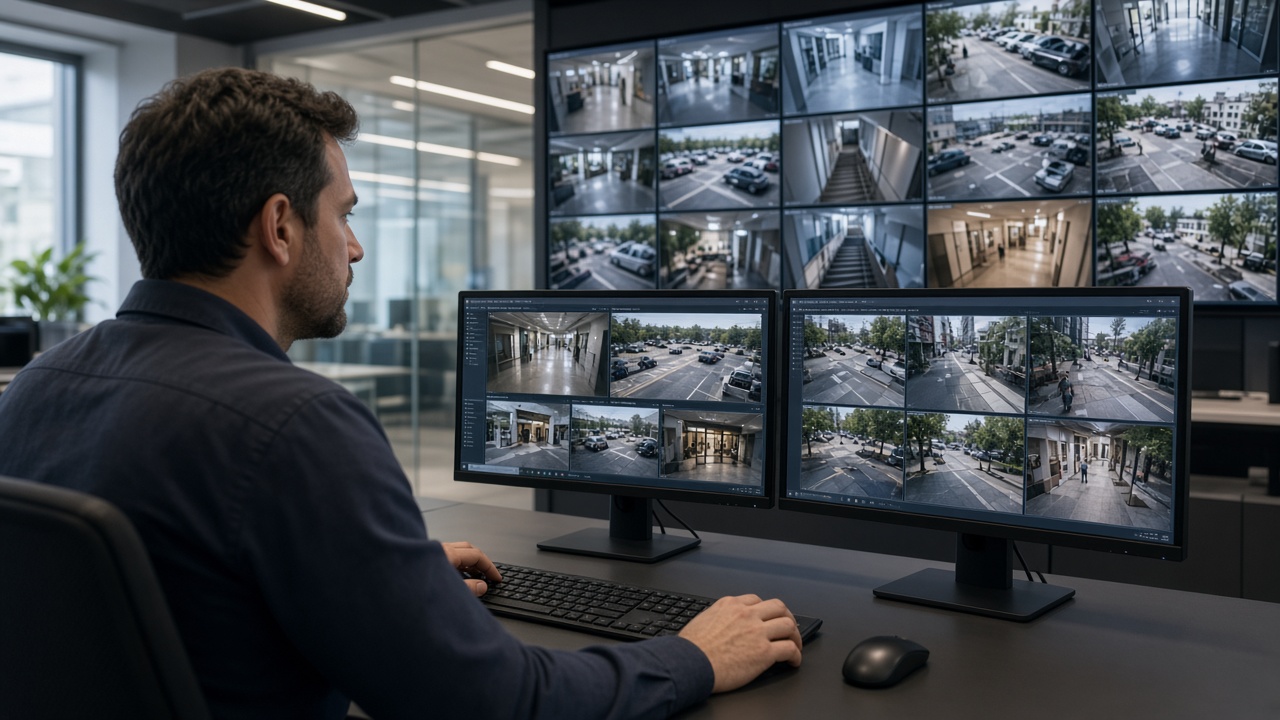
From Multiple Cameras to One Operational View—TruSight can form the software intelligence layer of a traffic command environment.
Active traffic events
Violation events
ANPR events
Camera feeds
Location-wise activity
Alerts
Historical information
Operational dashboards
Where required, the platform can also integrate with displays, public-address systems and other command-centre infrastructure.
Connectivity
Connectivity & Integration
Traffic intelligence depends on more than cameras. TruSight deployments may involve:
IP Networks
VLAN Connectivity
Fibre Networks
VPN Connectivity
Internet Connectivity
Edge Computing
Central Servers
APIs
e-Challan Systems
Vahan / vehicle information services
SMS / Notification Systems
Command Centre Infrastructure
The connectivity architecture should be designed around the actual site conditions.
Environments
Designed for Different Traffic Environments
One platform adapted to urban roads, highways, corridors, smart cities and district-scale deployments.
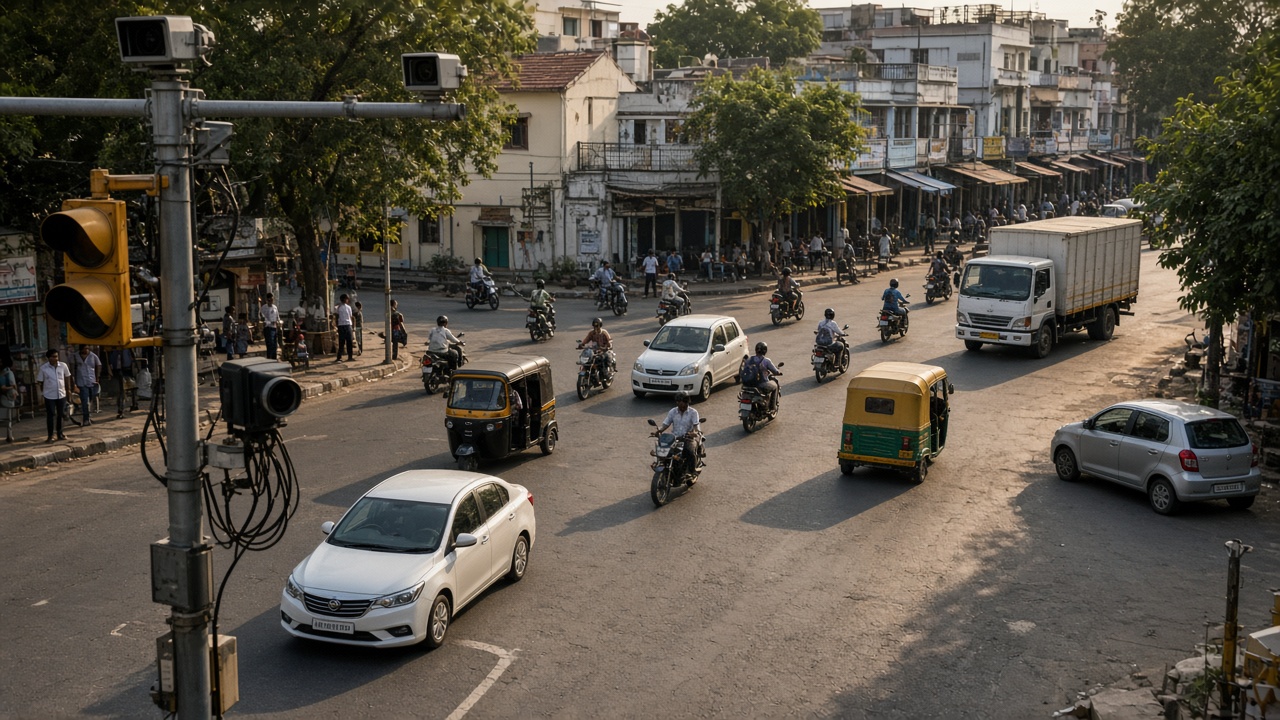
Urban Traffic
Busy junctions and city roads require visibility into vehicle movements, violations and traffic events.
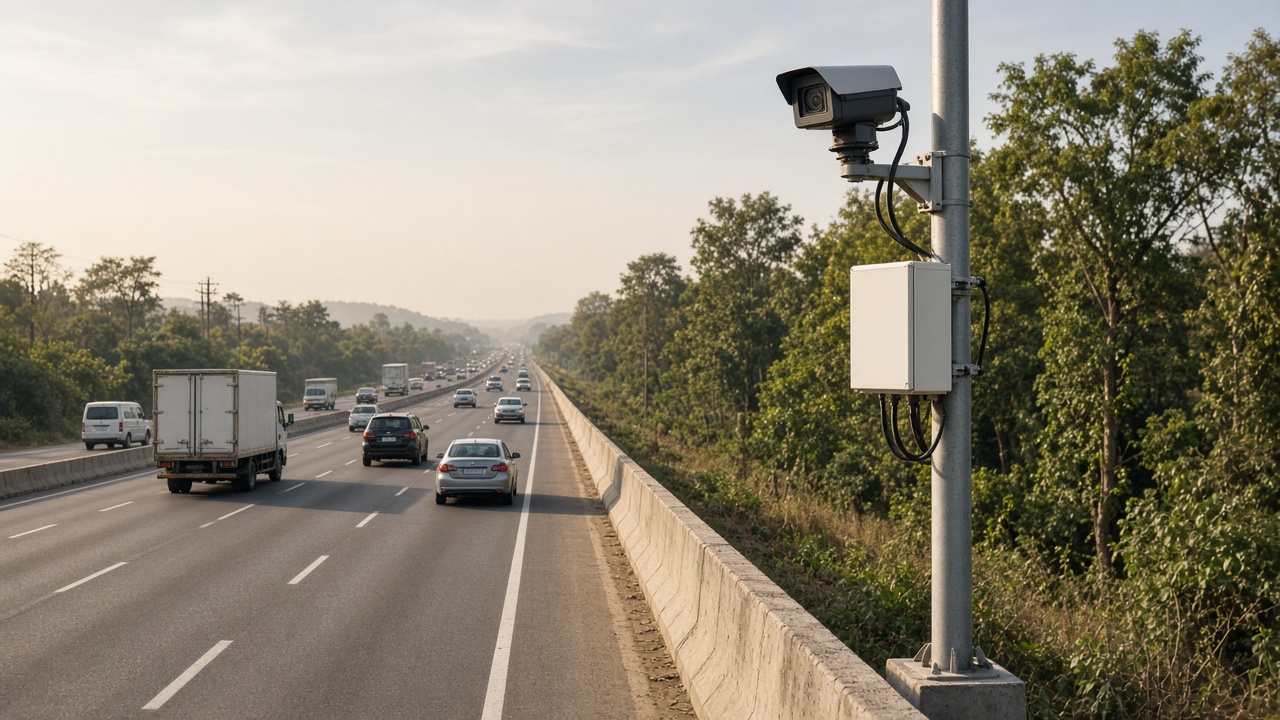
Highways
Vehicle intelligence, speed monitoring, incident awareness and long-distance connectivity.
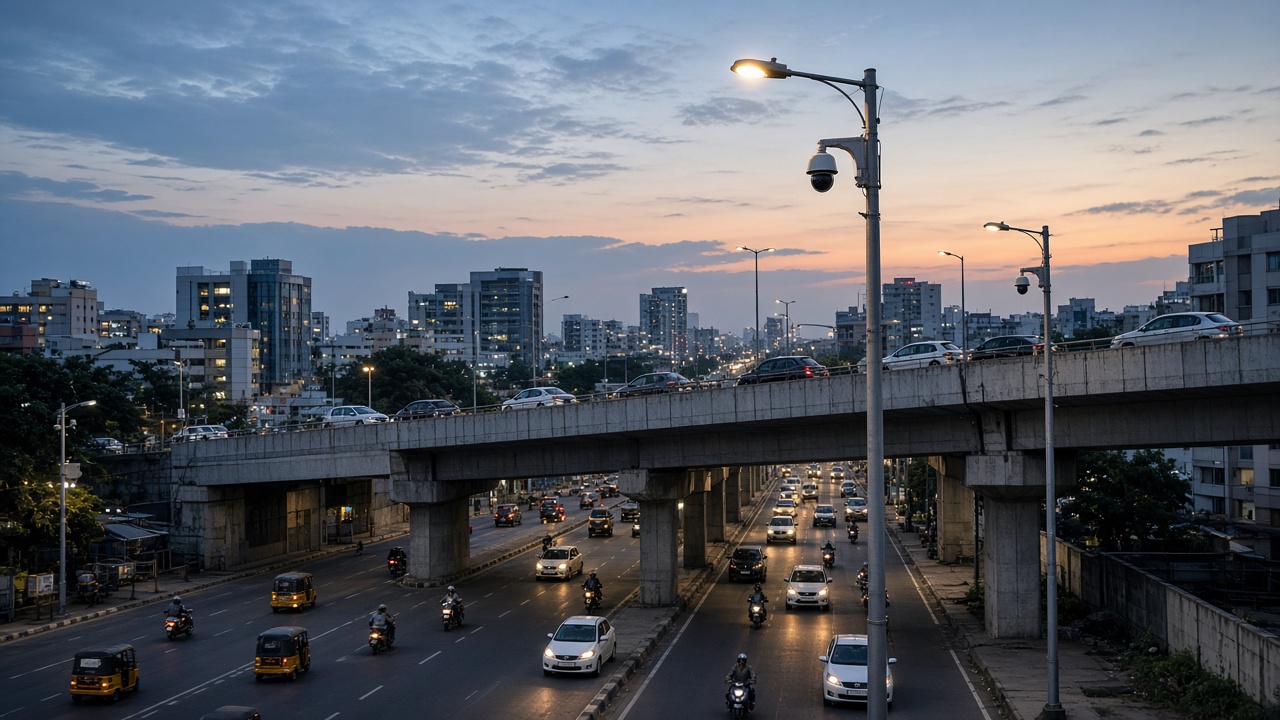
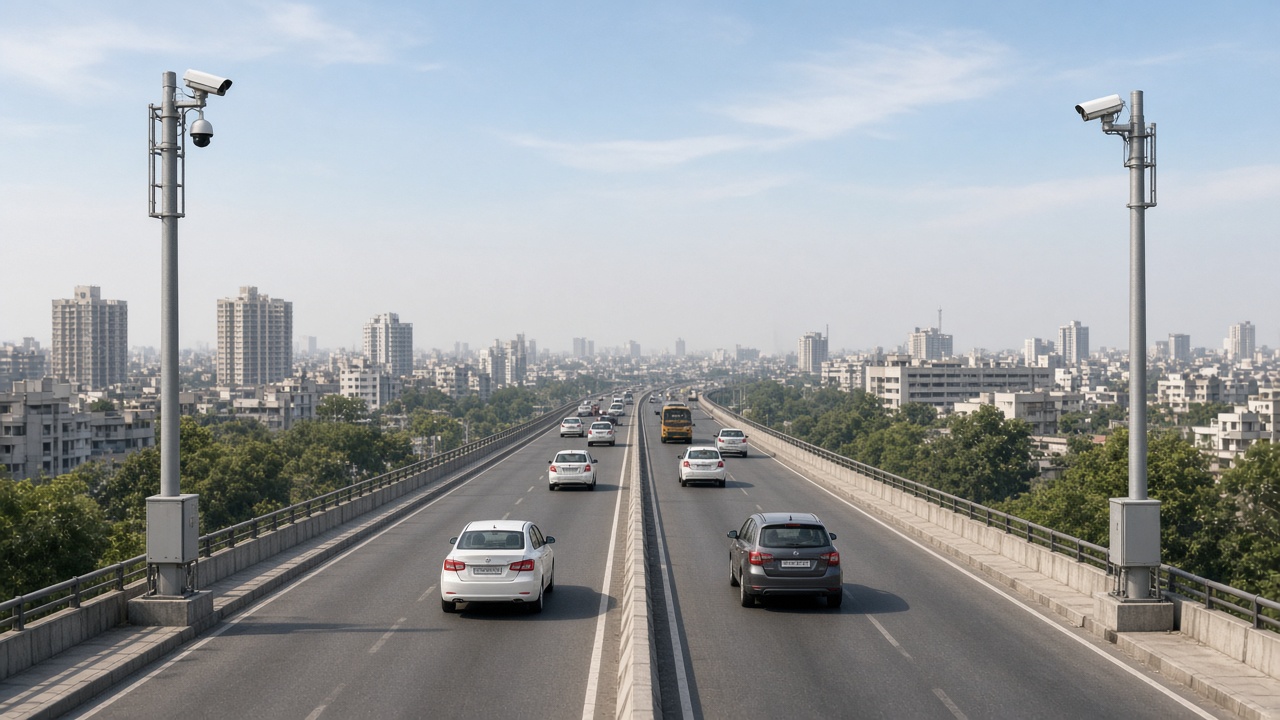
Flyovers & Corridors
Multi-camera coverage to monitor vehicle movement across defined road sections.
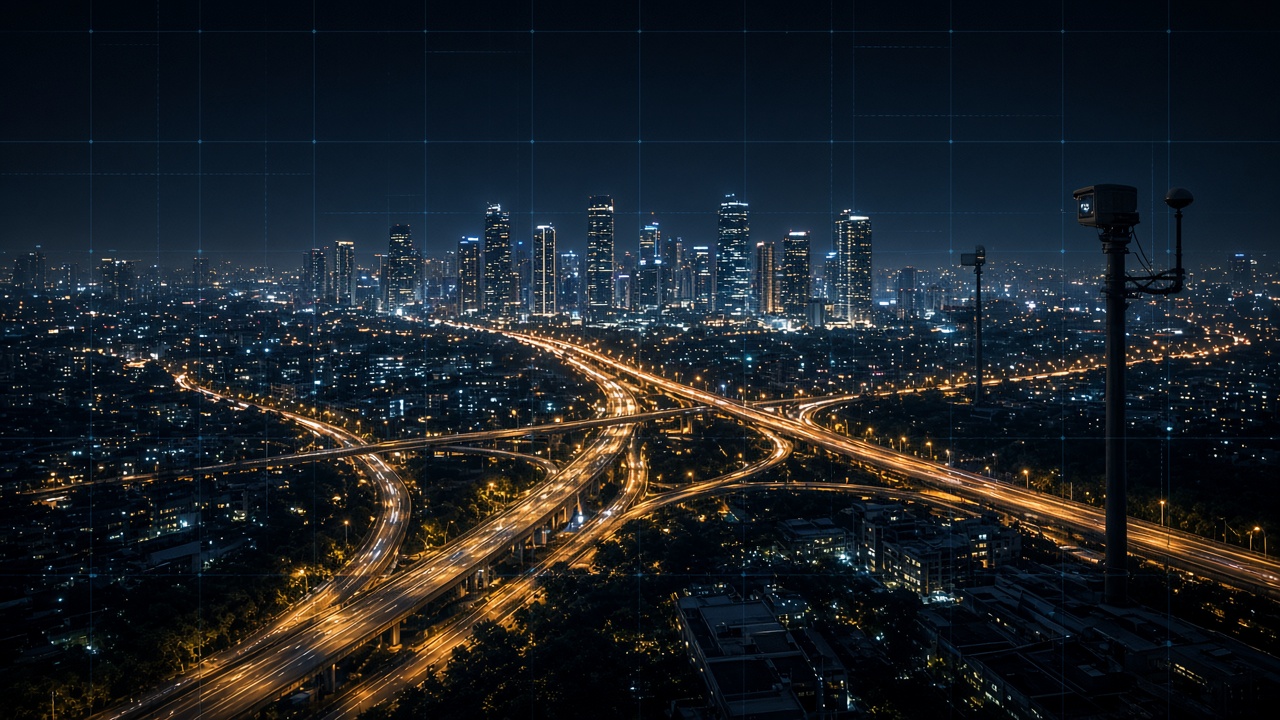
Smart Cities
Centralized traffic intelligence as part of broader smart-city command-and-control.
District-Wide
Distributed traffic locations connected to centralized monitoring and event management.
Case Studies
Real-World TruSight Deployments
Built Through Actual Field Experience—TruSight is not positioned only as a conceptual ITMS platform. MLT has worked on real traffic surveillance and intelligent traffic management deployments.
Theni District
AI-powered traffic surveillance, centralized monitoring and traffic intelligence, including an e-Challan integration workflow and centralized visibility across deployed locations.
View Case Study →
GD Naidu Flyover, Coimbatore
Traffic surveillance with section-speed monitoring—vehicle detection across defined points to determine travel time and calculate average speed.
View Case Study →
Kallakurichi–Salem Highway
Traffic surveillance at critical highway locations with traffic violation detection and e-Challan integration as key objectives.
View Case Study →Why TruSight
Why TruSight?
Traffic Intelligence Built Around the Complete Workflow
AI Video Intelligence
Go beyond recording video with computer-vision-based event detection.
Vehicle Intelligence
Connect vehicle detection, classification and identification.
ANPR
Turn vehicle video into structured registration-plate information.
Violation Detection
Identify configured traffic events using AI-based video analytics.
Speed Intelligence
Support appropriate point-based or section-speed approaches.
Evidence
Associate traffic events with relevant visual information.
Centralized Monitoring
Bring multiple locations into one operational environment.
Integration
Connect traffic intelligence with external systems and authorized enforcement workflows.
Flexible Architecture
Adapt edge, centralized and hybrid processing to the deployment environment.


DhurgAI provides the computer vision and video intelligence foundation. TruSight applies that intelligence specifically to traffic, vehicle and enforcement workflows.
Video Infrastructure→
DhurgAI→
TruSight ITMS→
Traffic Events→
Command Centre
This architecture allows MLT to develop traffic-specific intelligence while retaining the flexibility of a broader AI video analytics platform.
Ecosystem
TruSight Technology Ecosystem
From video streams to command-centre visibility—one connected intelligence chain.
VIDEO→
AI→
VEHICLE→
ANPR→
SPEED→
EVENTS→
EVIDENCE→
INTEGRATION→
COMMAND CENTRE
Traffic cameras and video streams
Computer vision and event detection
Detection, classification and identification
Number plate recognition
Point and section-speed intelligence
Structured traffic events
Images and video associated with events
APIs and external systems
Centralized operational visibility
Effectiveness
What Makes a Traffic Intelligence System Effective?
Technology alone does not determine the quality of an ITMS deployment. Successful implementation also depends on:
Camera Placement
The camera must have an appropriate field of view for the intended use case.
Image Quality
Resolution, shutter speed, lighting, lens selection and positioning influence AI performance.
Road Geometry
Lane configuration, detection zones and traffic movement affect what can be reliably detected.
Connectivity
Appropriate communication infrastructure between field locations and central systems.
Processing
AI workloads need suitable edge or server infrastructure.
Integration
Traffic intelligence becomes more useful when connected to authorized operational and enforcement workflows.
Human Validation
AI-generated events should be subject to appropriate operational validation and governance, particularly when they feed enforcement processes.
TruSight is therefore designed as a system, not merely as an AI algorithm.
Growth Path
A Platform That Can Grow With the Deployment
A traffic project does not necessarily need to implement every capability from day one. Expand in clear phases as requirements evolve.
Phase 01 of 05
Camera Monitoring + ANPR
Establish live visibility and vehicle identification foundations across deployed traffic locations.
This allows authorities and infrastructure operators to expand traffic intelligence as requirements evolve.
FAQ
Frequently Asked Questions
Quick answers about TruSight, ANPR, violations, e-Challan, cameras, speed monitoring and multi-location deployments.
TruSight is MLT's Intelligent Traffic Management System platform combining AI video analytics, ANPR, vehicle intelligence, traffic violation detection, speed monitoring, event management and centralized traffic monitoring.
ANPR is one of TruSight's capabilities. TruSight is broader than ANPR and can combine vehicle identification with traffic analytics, violations, speed intelligence, evidence and operational workflows.
Yes, TruSight can be integrated with authorized e-Challan/enforcement systems through appropriate APIs and workflows, subject to the requirements of the relevant authority and system.
TruSight can be configured to detect defined traffic violations using AI-based video analytics. The applicable violation types depend on the project configuration, camera suitability and operational requirements.
Not necessarily. TruSight is an AI video analytics platform and can work with suitable IP/video sources depending on the use case. Camera specifications, placement and image quality must be evaluated for each application.
Potentially. Existing cameras can be evaluated based on resolution, field of view, lighting, positioning, connectivity and the intended analytics. Not every existing camera will be suitable for every AI use case.
Certain speed-monitoring approaches, such as section-speed monitoring, can be implemented using video-based vehicle detection across defined points. The appropriate method depends on the road, project specification and enforcement requirements.
Yes. TruSight can be architected for highway and corridor environments, subject to appropriate cameras, processing, connectivity and site infrastructure.
Yes. The platform can provide centralized monitoring and event management across distributed traffic locations.
No. TruSight can be relevant to traffic police, government authorities, smart-city operators, highway operators, infrastructure agencies and organizations responsible for traffic and road operations.
Outlook
The Future of Traffic Management Is Intelligent
Traffic infrastructure is moving from passive surveillance toward systems that can understand what is happening on the road. The next generation of traffic management is not simply about adding more cameras. It is about connecting:
Cameras
AI
Vehicles
Traffic Events
Evidence
Data
Enforcement Workflows
Command Centres
into one intelligent operational ecosystem. TruSight brings these layers together.
See the road. Understand the traffic. Detect the event. Create the evidence. Enable the action.
Build Intelligent Traffic Infrastructure with MLT.
Talk to Us About TruSight
Build safer, smarter traffic operations with AI video intelligence, ANPR, violations, speed monitoring and command-centre workflows.