
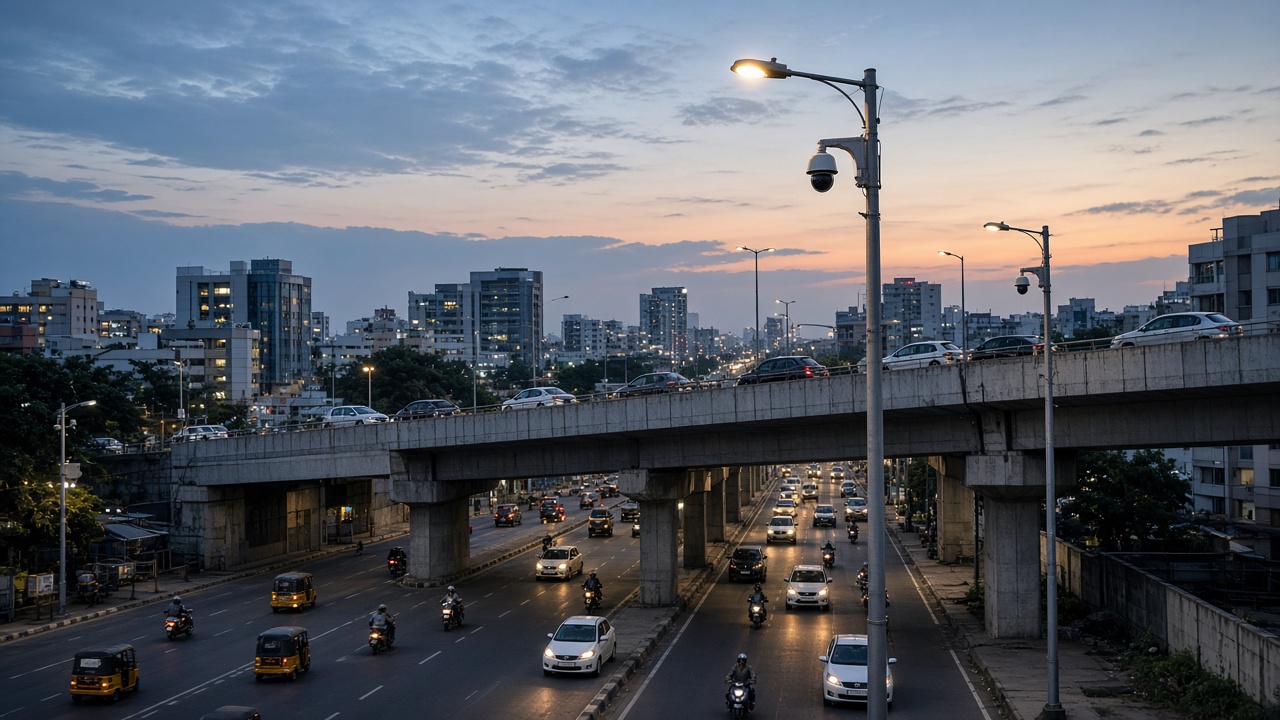
Turning Multi-Camera Traffic Surveillance into Intelligent Traffic Monitoring
Mountain Lamp Technologies implemented an AI-powered traffic surveillance solution at GD Naidu Flyover in Coimbatore, using its TruSight Intelligent Traffic Management Platform.
With 44 traffic surveillance cameras, the deployment demonstrates how AI-powered video analytics can transform a large multi-camera traffic environment into an intelligent monitoring system capable of detecting vehicles, analysing movement and identifying speed-related violations.
A key aspect of the deployment was the use of section-speed monitoring, enabling speed violation detection based on vehicle movement between defined points rather than relying exclusively on a radar-based speed measurement approach.
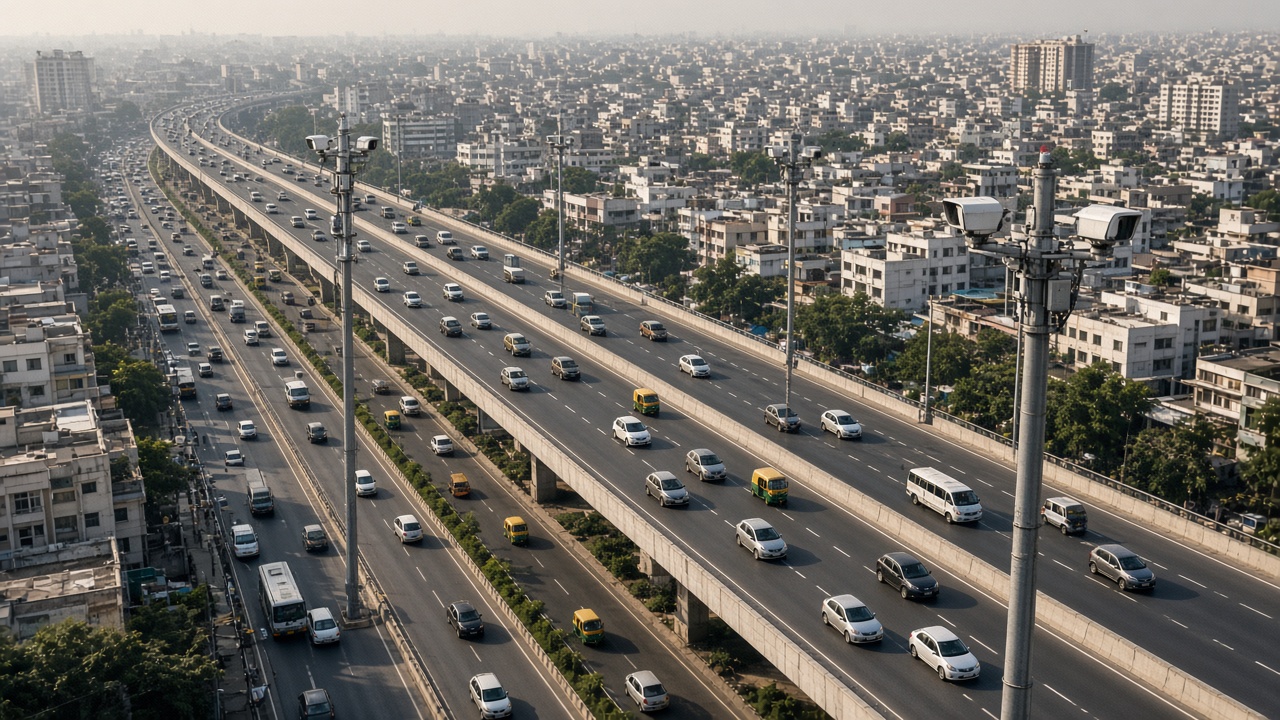
Project at a Glance
A large-scale flyover deployment focused on vehicle monitoring and section-speed based violation detection.
The Challenge: Monitoring Traffic Across a Large Multi-Camera Environment
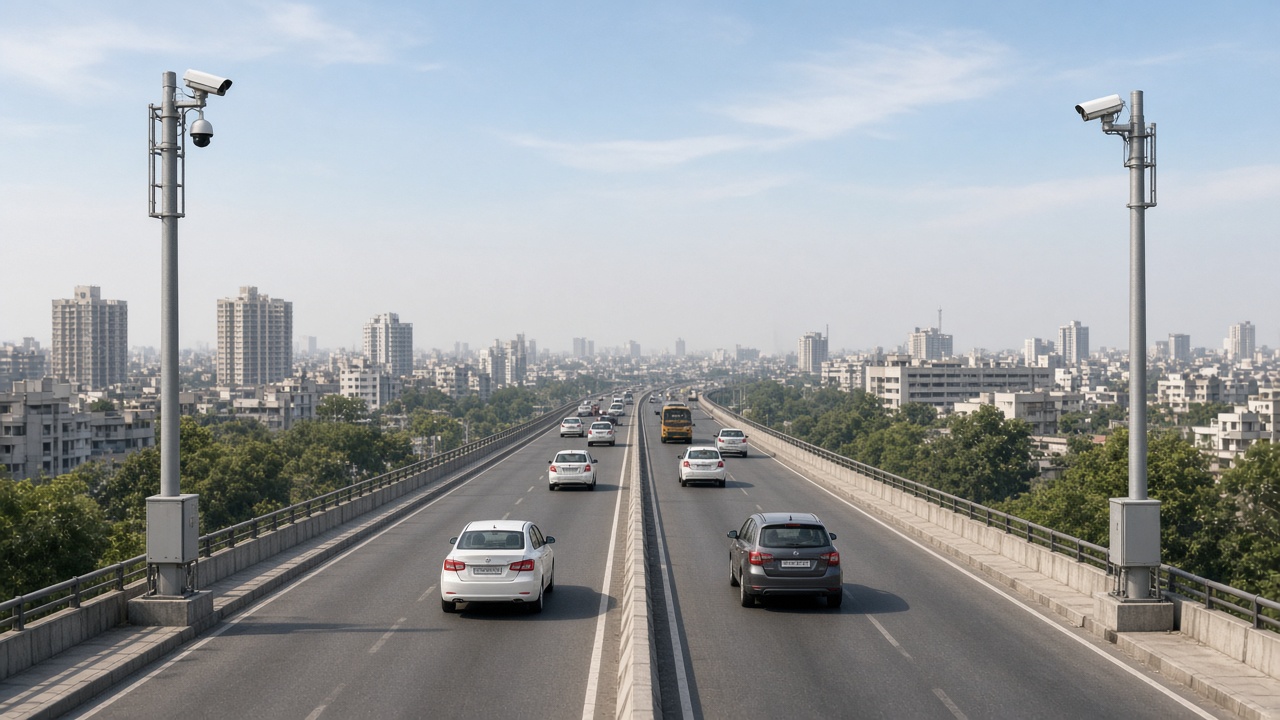
Modern flyovers and major road corridors experience continuous vehicle movement throughout the day. Traditional CCTV infrastructure provides valuable visual coverage, but monitoring dozens of camera feeds simultaneously presents an operational challenge.
With 44 cameras covering the GD Naidu Flyover environment, continuously observing every feed manually would require significant operator attention. The challenge was not simply to install cameras—it was to create an intelligent layer that could analyse activity and surface relevant events.
The Objective: Make Traffic Cameras Intelligent
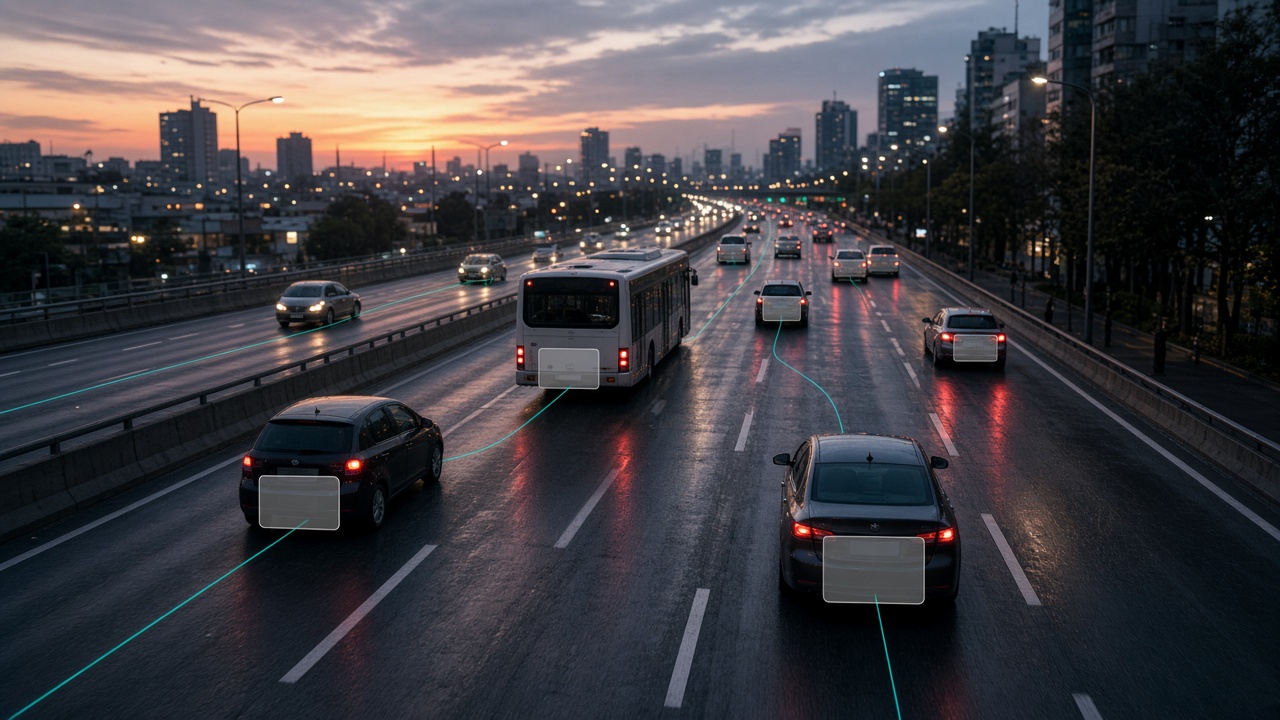
The GD Naidu Flyover deployment was designed around five core objectives—moving from passive video surveillance to AI-assisted traffic intelligence.
The Solution: TruSight AI Traffic Surveillance
Mountain Lamp Technologies deployed TruSight as the intelligent analytics layer for the camera infrastructure—converting traffic video into structured information and events that authorized personnel can monitor.
44-Camera Traffic Surveillance Network
The multi-camera architecture provides extensive visual coverage of the flyover traffic environment. A large camera deployment also creates information overload—without intelligent analytics, operators may need to continuously monitor dozens of streams.
TruSight addresses this by introducing an AI analytics layer over the camera network. Instead of simply displaying video, the platform can identify relevant traffic events and present them as structured information.
- 44 cameras
- 44 live feeds
- Continuous watching
- Uneven attention
- Missed events
- 44 cameras
- AI analysis layer
- Relevant events first
- Centralized focus
- Actionable records
AI-Powered Vehicle Detection
The first step in intelligent traffic surveillance is understanding what is happening within the video. TruSight uses computer vision to identify vehicles and analyse movement within monitored zones.
Section-Speed Monitoring
One of the technically interesting aspects of the GD Naidu Flyover implementation is section-speed monitoring.
Traditional point-based speed monitoring measures speed at a specific location. Section-speed monitoring evaluates the time taken by a vehicle to travel between two defined points—answering how fast the vehicle travelled, on average, across a road section.
The fundamental relationship is: Speed = Distance ÷ Time. When the known section distance is combined with measured travel time, the system can calculate average speed over that section.
How Section-Speed Detection Works
From vehicle detection to a speed-related event, the workflow is designed to be transparent and reviewable.
- Measures one location
- “How fast here?”
- Momentary reading
- Measures a road section
- “How fast across this stretch?”
- Average behaviour insight
AI + Multi-Camera Intelligence
The 44-camera environment provides more than individual feeds. When cameras are connected through an intelligent analytics platform, information from different points can be correlated—turning independent cameras into one intelligent traffic network.
Centralized Monitoring & Event Workflow
Managing 44 cameras requires a centralized operational view. TruSight provides live video, camera status, AI events, vehicle and speed-related events, timestamps, location context, alerts and historical records.
This shifts the operating model from Camera → Video → Recording → Manual Search to Camera → AI → Detection → Analysis → Event → Alert → Action.
Traffic Surveillance Use Cases
Depending on camera configuration and project requirements, TruSight can support multiple traffic analytics on the same ecosystem.
*ANPR availability depends on camera configuration and the specific deployment scope.
Before & After
The GD Naidu Flyover deployment illustrates the shift from CCTV monitoring to traffic intelligence.
- 44 cameras
- 44 video feeds
- Continuous manual monitoring
- Manual event identification
- Manual investigation
- 44 cameras
- TruSight AI
- Vehicle detection
- Multi-camera analysis
- Section-speed monitoring
- Centralized event action
Operational Benefits
Implementation Approach
A multi-camera traffic deployment requires coordinated planning across hardware, software, network and AI.
Key Implementation Lessons
Conclusion: 44 Cameras. One Intelligent Traffic Layer.
The GD Naidu Flyover deployment demonstrates how a large-scale traffic camera network can be transformed into an AI-assisted traffic surveillance system.
With 44 cameras connected through the TruSight platform, the solution provides a foundation for automated vehicle monitoring, traffic analytics and section-speed based violation detection.
The key lesson is simple: the value of a traffic camera network is not determined only by how many cameras are installed, but by how intelligently the information from those cameras can be processed and acted upon.
From Watching Roads → Understanding Traffic. From Video Recording → Actionable Intelligence.
Whether you are planning a flyover surveillance system, junction monitoring, corridor surveillance or district-level Intelligent Traffic Management System, Mountain Lamp Technologies can help design an architecture that combines cameras, AI analytics, processing, connectivity and centralized monitoring.