
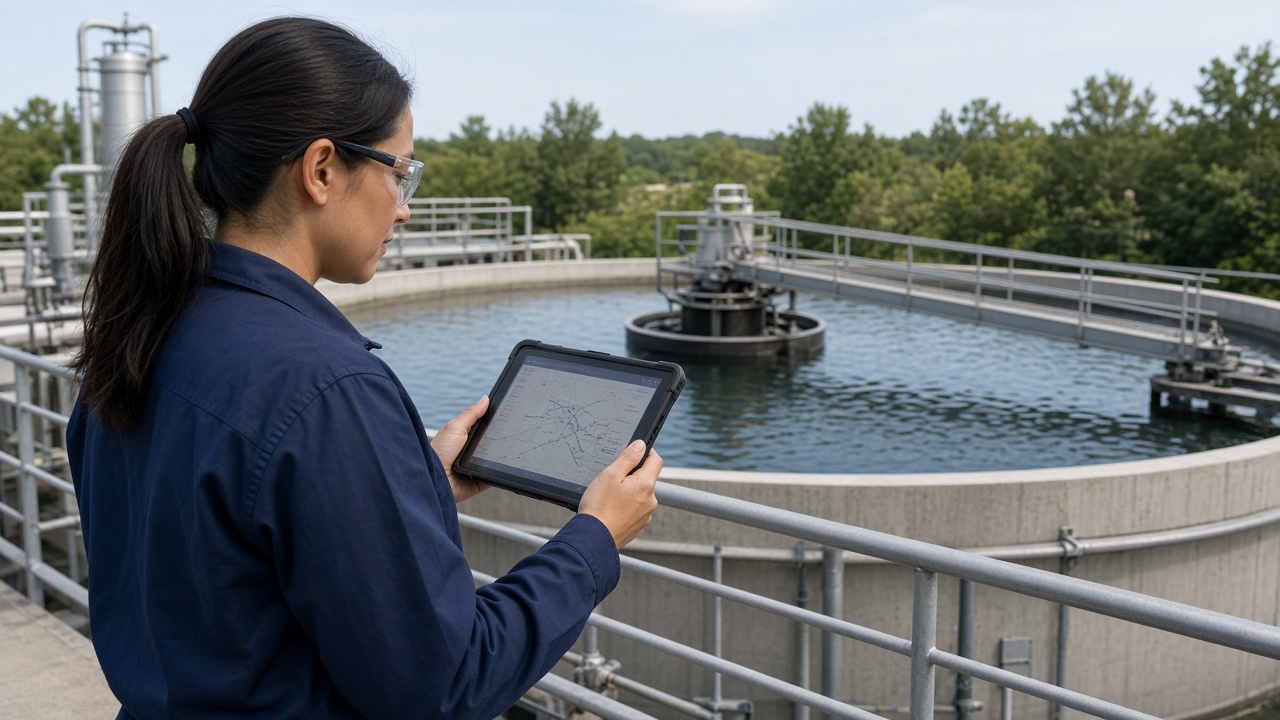
Making Water Infrastructure Visible, Measurable and Intelligent
Water infrastructure is distributed across locations, but operational visibility is often fragmented. Tank levels, water availability, equipment status and other infrastructure parameters need to be monitored continuously to understand what is happening across the network.
MLT's H2O360 brings IoT, cloud connectivity and centralized intelligence together to create a unified monitoring platform for water infrastructure.
Sense → Connect → Monitor → Alert → Act
Every Tank. Every Reading. One Intelligent View.
Project at a Glance
A centralized IoT monitoring platform for smart water infrastructure, powered by iSenzoT.
The Challenge: Water Infrastructure Is Distributed. Monitoring Shouldn't Be.
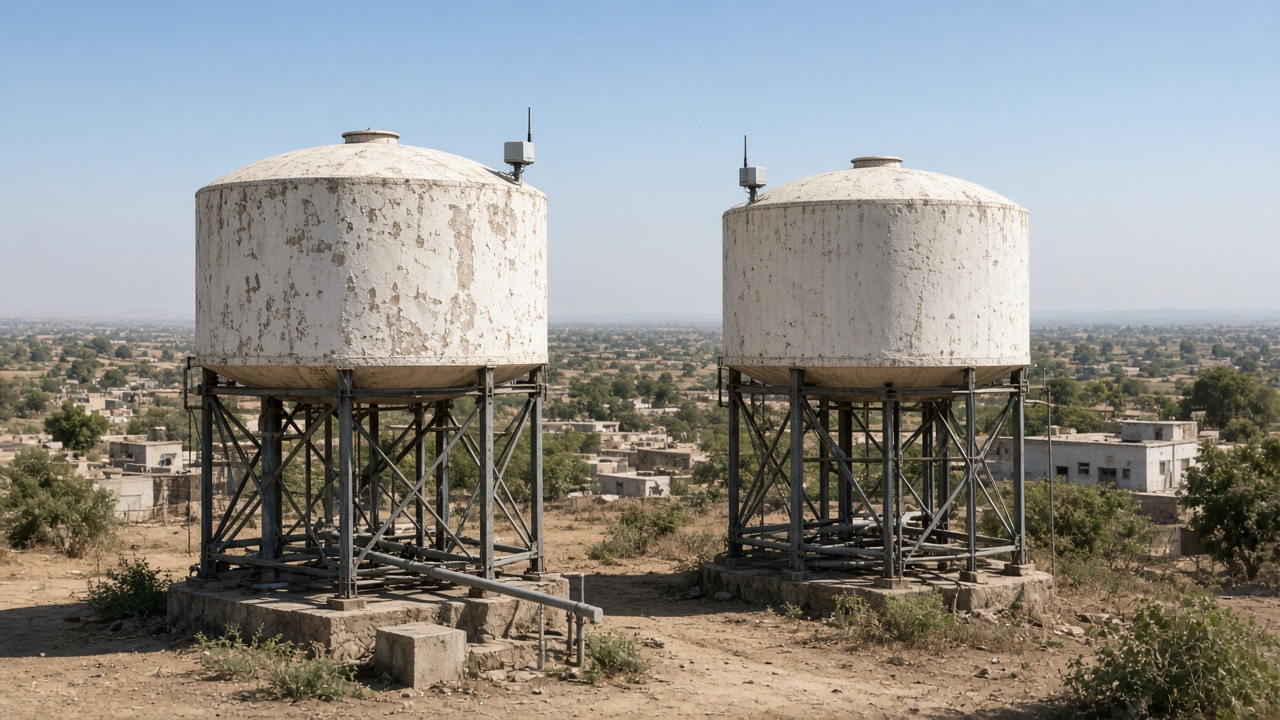
Water tanks and related infrastructure can be spread across multiple locations. Without centralized monitoring, operational teams may have limited visibility—and senior administrators can struggle to get a district-wide operational picture. H2O360 was conceived to address this gap.
The MLT Solution: A Digital Intelligence Layer for Water Infrastructure
H2O360 connects physical water infrastructure with a centralized digital platform. At the field level, IoT sensors capture relevant parameters. Data is transmitted through the IoT connectivity layer and delivered to the cloud platform through MQTT, then processed, stored and presented through centralized dashboards.
01 — Connecting the Physical Infrastructure
The first layer of H2O360 is the physical infrastructure. Sensors installed at water infrastructure locations continuously capture relevant operational information—so infrastructure can become a continuously monitored digital asset instead of depending entirely on periodic physical inspection.
02 — IoT Connectivity
Every location becomes a connected data point. The IoT layer provides connectivity between field infrastructure and the centralized platform. MQTT acts as the messaging layer for transmitting sensor data—creating a lightweight and scalable communication architecture suitable for distributed IoT deployments.
03 — Centralized H2O360 Dashboard
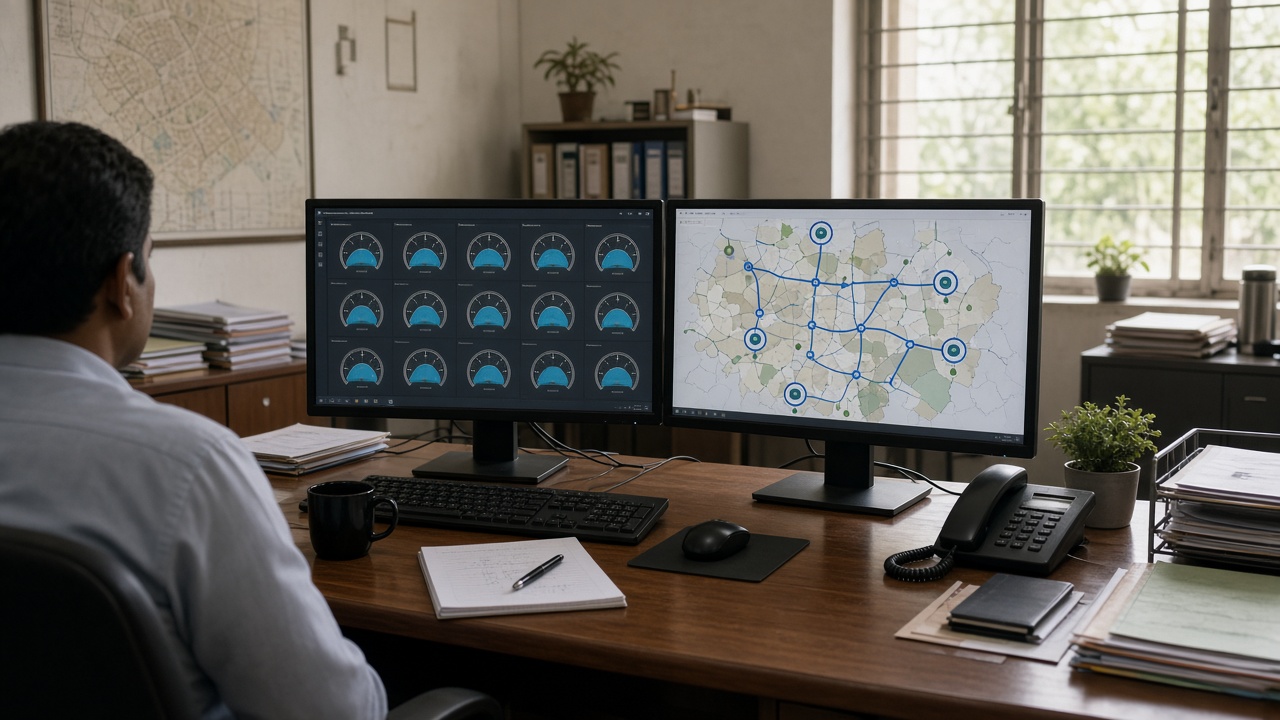
H2O360 provides a centralized interface where authorized users can monitor water infrastructure across locations—transforming individual sensor readings into an infrastructure-level view.
04 — Role-Based Visibility
H2O360 uses a role-based hierarchy designed around the way government and infrastructure organizations operate—so the same platform can support both strategic oversight and field-level monitoring.
05 — From Sensor Reading to Alert
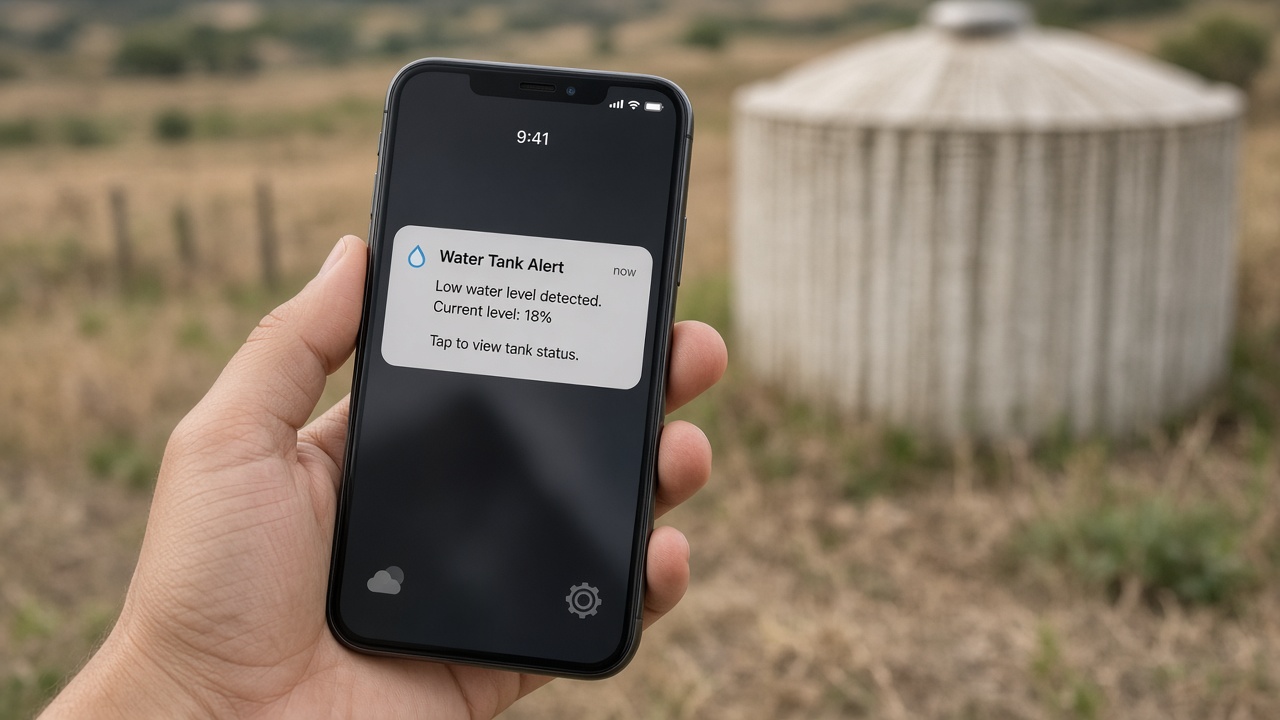
The platform can transform raw sensor information into actionable operational events—moving H2O360 beyond being a dashboard into an operational decision-support platform.
06 — Location-Based Water Intelligence
A major advantage of a centralized IoT platform is moving from individual devices to geographical and administrative intelligence—from “What is happening at this tank?” to “What is happening across the entire monitored network?”
07 — Historical Data & Trends
IoT becomes significantly more valuable when today's reading can be compared with historical behaviour. Over time, H2O360 creates a digital history of the water infrastructure.
08 — Cloud-Based Architecture
H2O360 is deployed on DigitalOcean, providing the cloud infrastructure for the platform. Separating field, communication, application, data and user layers provides a foundation for expansion as additional locations and assets are connected.
09 — From Monitoring to Smart Water Management
H2O360 can evolve beyond basic tank monitoring. Once infrastructure is connected and historical data accumulates, the platform provides a foundation for deeper water intelligence.
The H2O360 Intelligence Cycle
Technology Stack
Business & Operational Value
- Distributed tanks & sites
- Periodic physical checks
- Limited district picture
- Late exception discovery
- Connected sensors · MQTT
- Centralized dashboards
- Role-based oversight
- Alert → field action
Conclusion: From Smart Sensors to Smart Infrastructure
H2O360 represents a broader direction for Mountain Lamp Technologies. The objective is not simply to install sensors—it is to create a digital representation of physical infrastructure.
Once infrastructure becomes connected, it becomes possible to Monitor → Measure → Analyse → Alert → Optimise. That is the foundation of intelligent infrastructure.
Every Tank. Every Reading. One Intelligent View.
Mountain Lamp Technologies can help design H2O360-style architectures that connect tanks, sensors, MQTT, cloud dashboards, role-based access and operational alerts.