Solutions · AI & Video Intelligence

AI & Video Intelligence: Turn Video Into Intelligence

AI-powered video solutions that help organizations see, understand and respond to what is happening in the real world.

Solution Area Cameras · VMS · AI · Domain Intelligence 7 min read
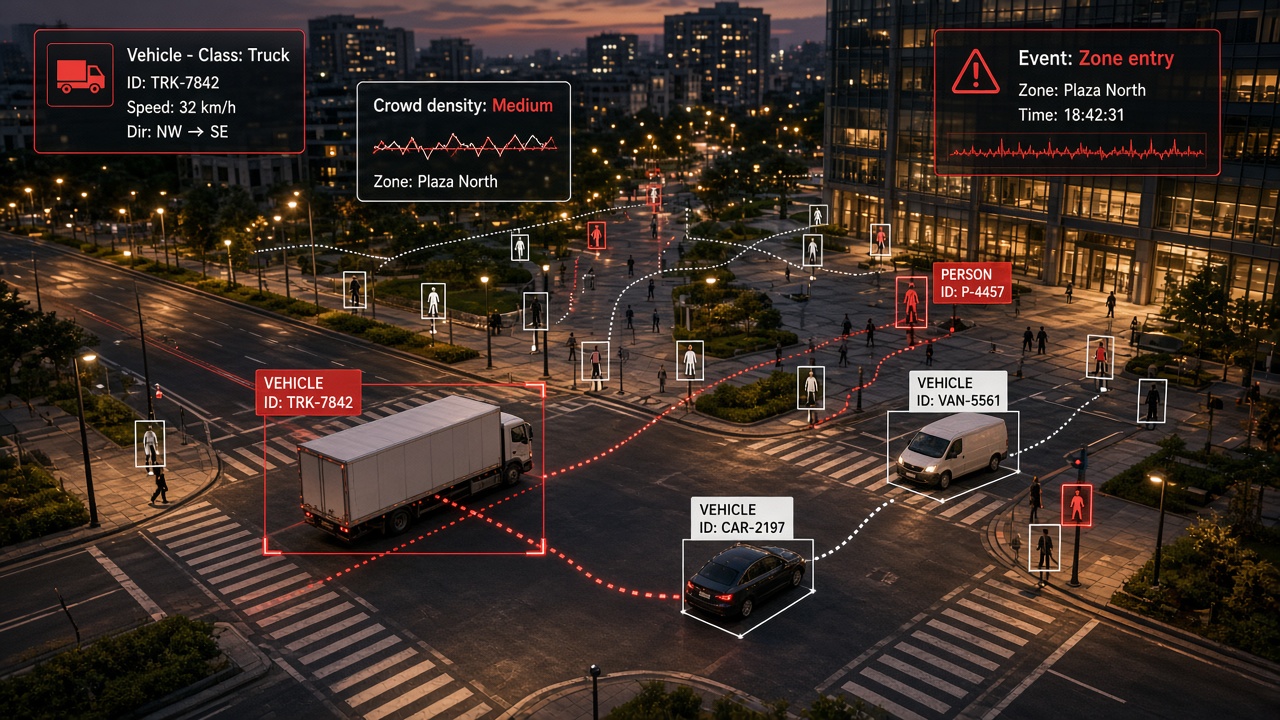
City intersection at dusk with AI overlays labelling people and vehicles, motion trails and live event cards for crowd density and zone entry

Turn Video Into Intelligence

Cameras generate enormous amounts of visual information. The challenge is turning that information into something useful.

Mountain Lamp Technologies combines AI, computer vision, video management and domain-specific intelligence to transform video streams into structured events, alerts, insights and operational workflows.

From workplace safety and security to traffic management and vehicle intelligence, MLT builds video solutions around real-world operational requirements.

AI & Video Intelligence at a glance
Solution AreaAI & Video Intelligence
FoundationDhurgAI AI Video Analytics Platform
Video SourcesExisting or New IP Cameras
Technology StackCameras → VMS → AI & CV → Domain Intelligence → Events → Workflows
DomainsSecurity · People · Safety · Traffic · Operations · Custom AI
OutputsStructured Events, Alerts, Evidence & Insights
Role of AIFocus Human Attention, Not Replace People
Solution highlights
0
Layers in the video stack
0
DhurgAI analytics domains
0
Solution areas
Events
Not endless footage
Evidence
Images & relevant video
Workflows
Alerts to action

From CCTV to Intelligent Video

Traditional CCTV answers one fundamental question: “What happened?”

AI-powered video intelligence adds another layer: What is happening, what should we pay attention to, and what information can help us respond?
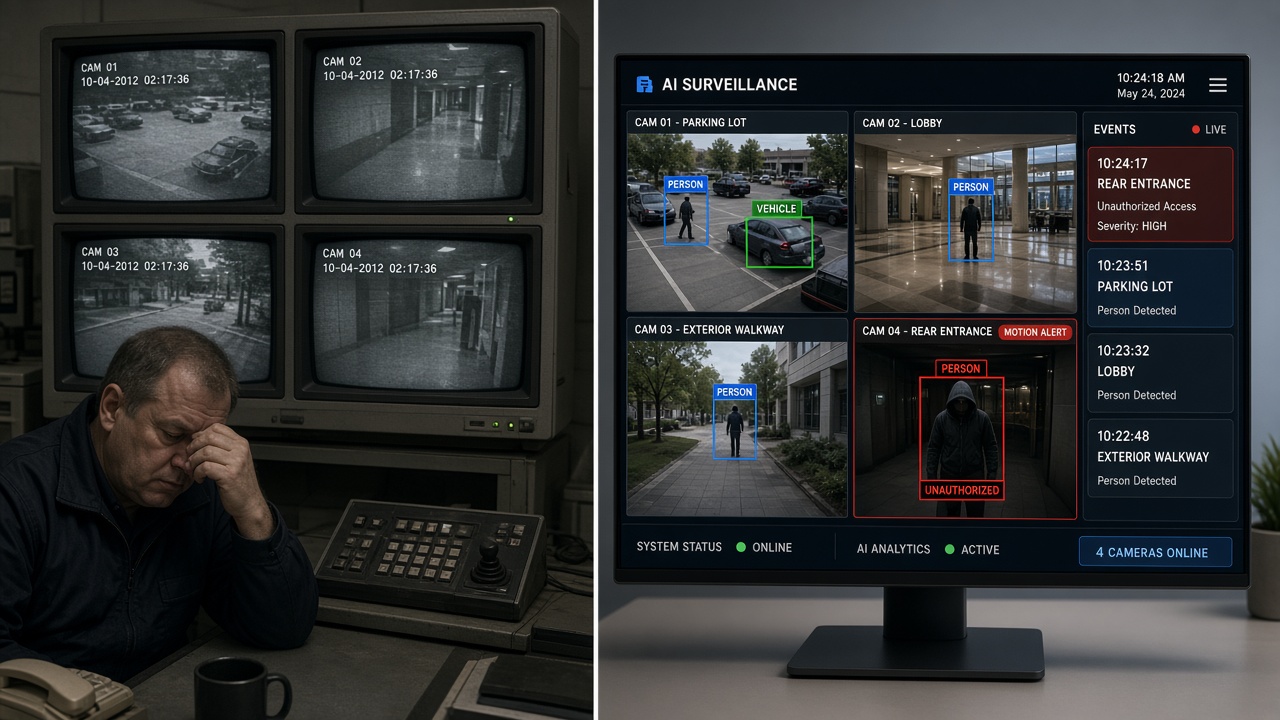
Split view of a tired guard in front of grainy CCTV monitors beside a modern AI surveillance screen with labelled detections and a live event list
From passive recording to intelligent video: detections, events and alerts that direct attention
Traditional CCTV
  1. Records continuously
  2. Operators watch many screens
  3. Footage searched after the fact
  4. Answers “What happened?”
Intelligent Video
  1. Detects configured events
  2. Analyses what is happening
  3. Attaches evidence and insight
  4. Alerts the right people
  5. Supports a timely response
From video to action
1
VideoCamera streams
2
DetectionPeople, vehicles, objects
3
AnalysisRules & context
4
EventStructured record
5
Evidence / InsightImages, clips, data
6
AlertRight person notified
7
ActionHuman response

This doesn’t mean that AI replaces security personnel, traffic operators or business decision-makers. It means technology can help them focus their attention on defined events and relevant information rather than manually observing every frame.

What Is AI & Video Intelligence?

More Than Camera Monitoring

AI & Video Intelligence combines video infrastructure with artificial intelligence and computer vision to extract meaningful information from video.
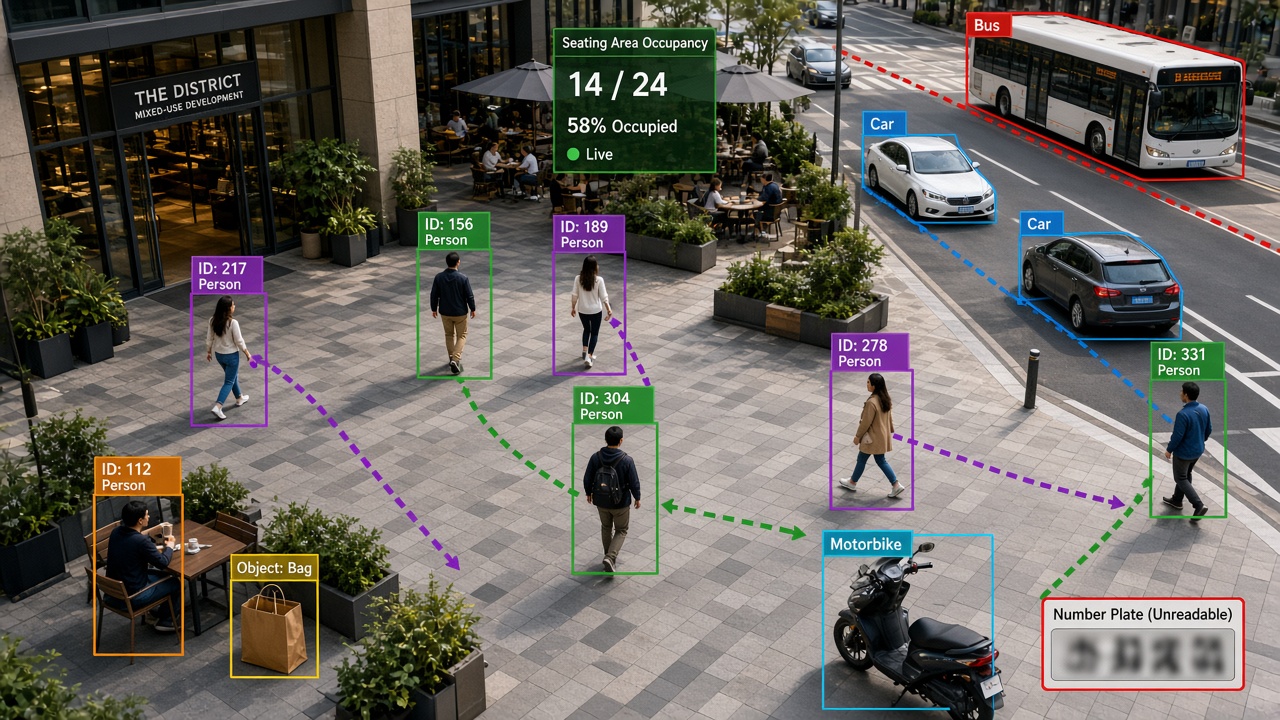
Elevated street and forecourt view with AI labels on people, cars, a bus, a motorbike, a bag, an unreadable number plate and a seating occupancy counter
One scene, many signals: people, vehicles, objects, plates and occupancy identified by computer vision
Depending on the application, a solution may identify
PeoplePresence & movement
VehiclesDetection & class
ObjectsConfigured object types
MovementDirection & tracking
Defined BehavioursLoitering, entry & more
Security EventsIntrusion & access
Safety ConditionsWorkplace safety events
Traffic EventsConfigured violations
Number PlatesANPR
OccupancyCounts & density
Other Visual EventsAs configured

The resulting information can then be used for:

How the information is used
MonitoringLive situational view
AlertsDefined events flagged
InvestigationFaster event search
ReportingEvent records
Operational AnalyticsTrends & patterns
Safety WorkflowsWorkplace safety
Security WorkflowsVerification & response
Traffic ManagementRoads & junctions
Business IntelligenceDashboards & insight

The exact capabilities available depend on the AI model, camera characteristics, environment and deployment configuration.

The MLT AI & Video Intelligence Ecosystem

MLT approaches video intelligence as a technology stack rather than a single application.
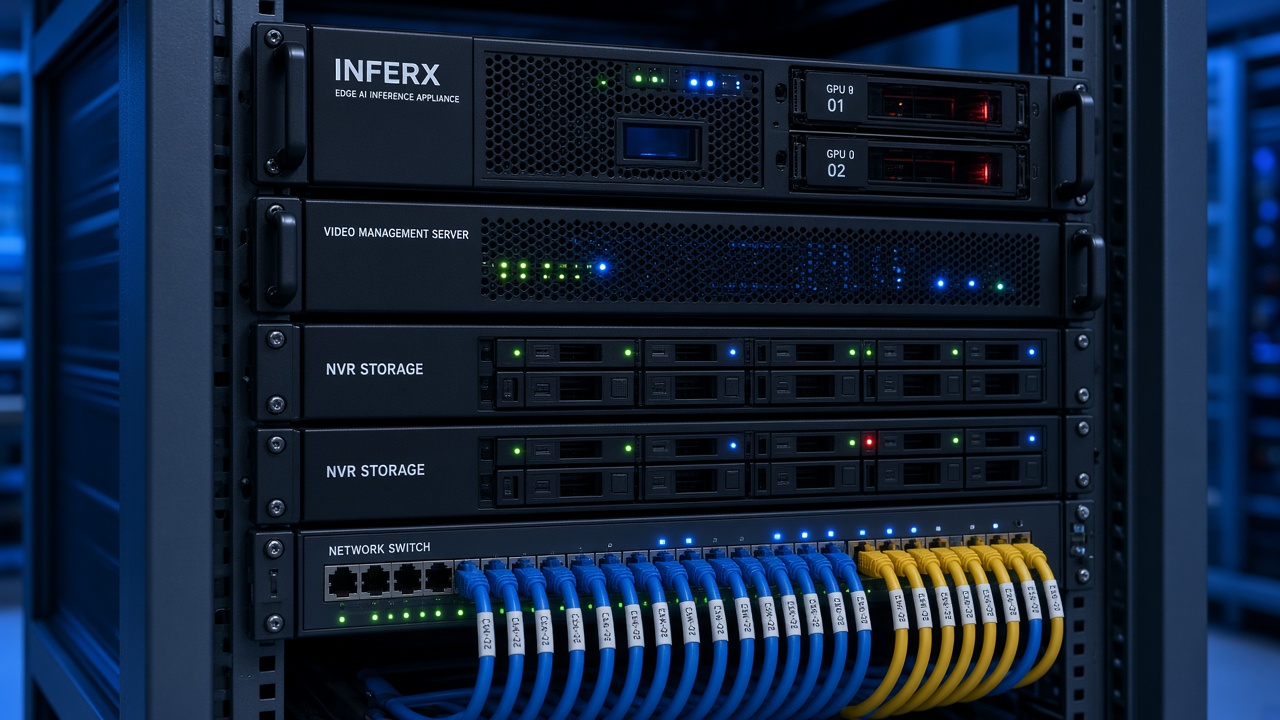
Server rack with an edge AI inference appliance, video management server, NVR storage and a network switch patched to IP cameras
Behind every intelligent camera view: video management, storage and AI inference working together
The video intelligence stack
Cameras & Video SourcesExisting or new IP cameras and suitable video sources
Video ManagementCentralized video streams, monitoring and event management
AI & Computer VisionDetection, classification, tracking and configured analytics
Domain IntelligenceSecurity, safety, traffic, vehicle or operational intelligence
Events & EvidenceStructured events, associated images and relevant video
Applications & WorkflowsDashboards, alerts, command centres and external integrations

Powered by DhurgAI

MLT’s AI Video Intelligence Foundation

DhurgAI is MLT’s AI-powered video analytics platform. It provides the underlying AI and computer vision capabilities used across multiple video intelligence applications.

DhurgAI can be configured to analyse video for different categories of intelligence, including:
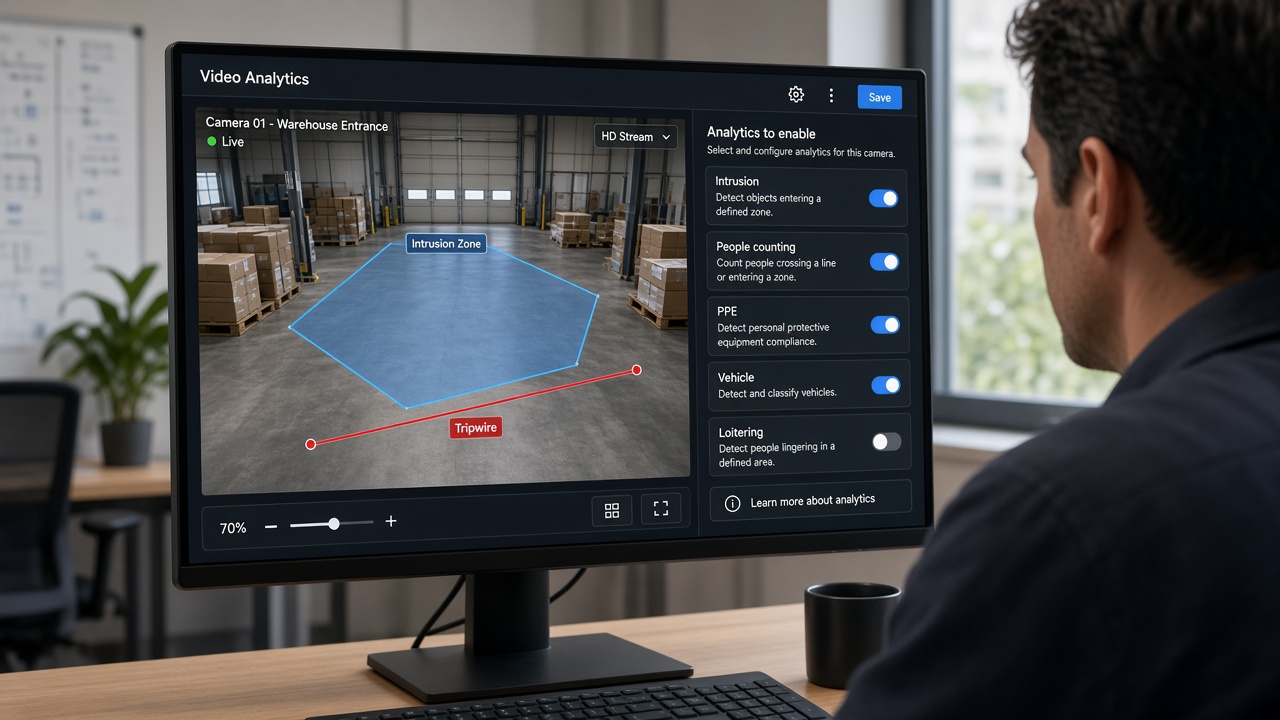
Engineer configuring video analytics on a warehouse entrance camera with a drawn intrusion zone, a tripwire and toggles for intrusion, people counting, PPE, vehicle and loitering
Configured analytics: zones, lines and rules are set per camera for the events that matter
DhurgAI capability categories
SecurityIntrusion, perimeter monitoring, unauthorized access and other configured security events
PeoplePeople detection, counting, tracking, occupancy and other configured people analytics
SafetyDefined workplace safety conditions and compliance-related events
TrafficVehicle detection, classification, ANPR and configured traffic violations
OperationsOperational monitoring, counting, tracking and other application-specific analytics
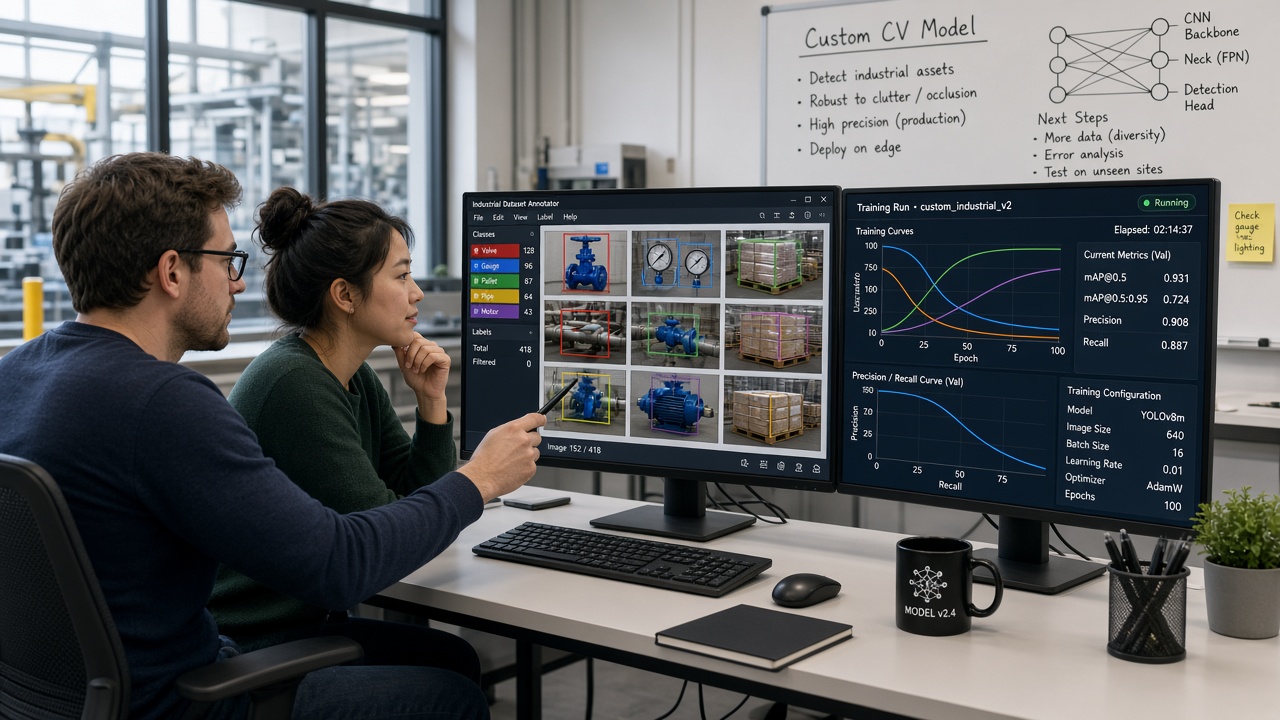
Custom AICustomer-specific objects, conditions or behaviours where an appropriate AI model can be developed and deployed
Two AI engineers annotating industrial images of valves, gauges and pallets while a second screen shows model training curves and precision-recall metrics
Custom AI: where an appropriate model can be developed, customer-specific objects and conditions become detectable

Explore DhurgAI →

Five Areas of AI & Video Intelligence

The MLT Solutions portfolio is organized into five major areas of AI & Video Intelligence.
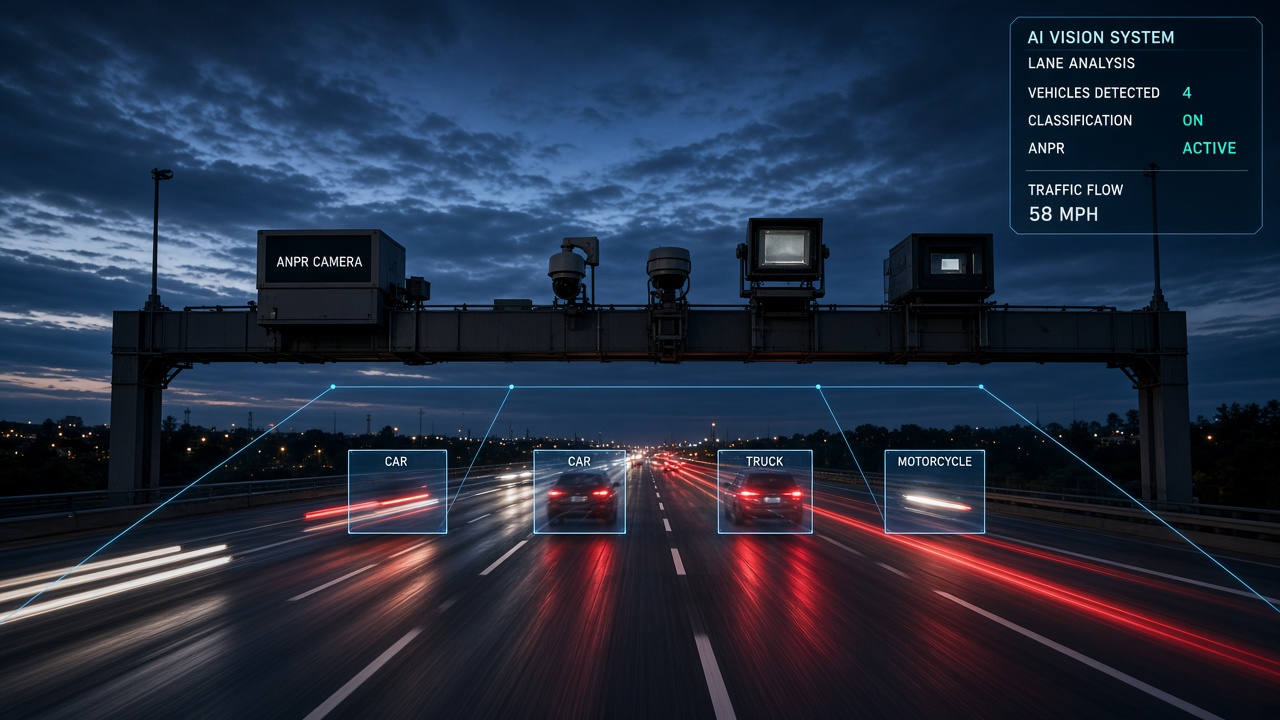
Highway gantry at dusk fitted with ANPR and traffic cameras, with AI lane analysis and vehicle classification boxes over passing traffic
From analytics and video management to traffic, vehicle intelligence and surveillance

One Video Stream. Multiple Intelligence Layers.

A major advantage of AI video analytics is that the same camera infrastructure may support multiple configured analytics, subject to camera suitability and available processing capacity.

For example, a camera at a facility entrance might support:
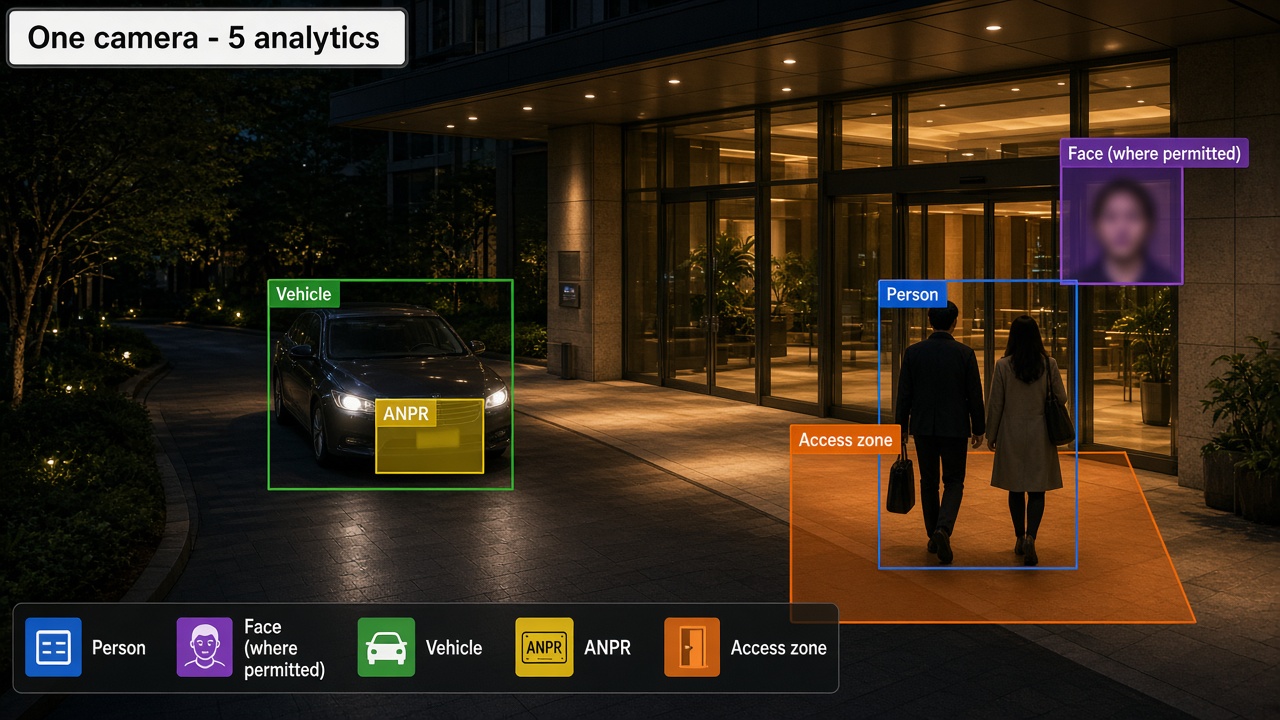
One entrance camera, five analytics
Person DetectionPeople entering
Face RecognitionWhere appropriate
Vehicle DetectionArrivals & departures
ANPRPlate recognition
Unauthorized Access MonitoringDoor zone events
Night camera view of a hotel entrance with five analytics on one frame: a person box, a blurred face labelled where permitted, a vehicle box, a blurred number plate labelled ANPR and an orange access zone, with a legend reading one camera, five analytics
One camera, five analytics layers: person, face (where permitted), vehicle, ANPR and access zone

The actual combination depends on the camera view, lighting, image quality, AI models and processing resources.

This allows organizations to build intelligence incrementally rather than treating every use case as a separate camera deployment.

Existing Cameras or New Infrastructure?

Start With What You Already Have

AI video analytics does not automatically require replacing every existing camera.

Existing cameras can potentially be integrated when they provide suitable:

What makes an existing camera suitable
ResolutionEnough pixels on target
Field of ViewCovers the right area
Image QualityClear, sharp frames
LightingDay & night conditions
Camera PositioningHeight & angle
Frame RateSmooth enough motion
ConnectivityReliable network
Video Stream AccessUsable stream interface

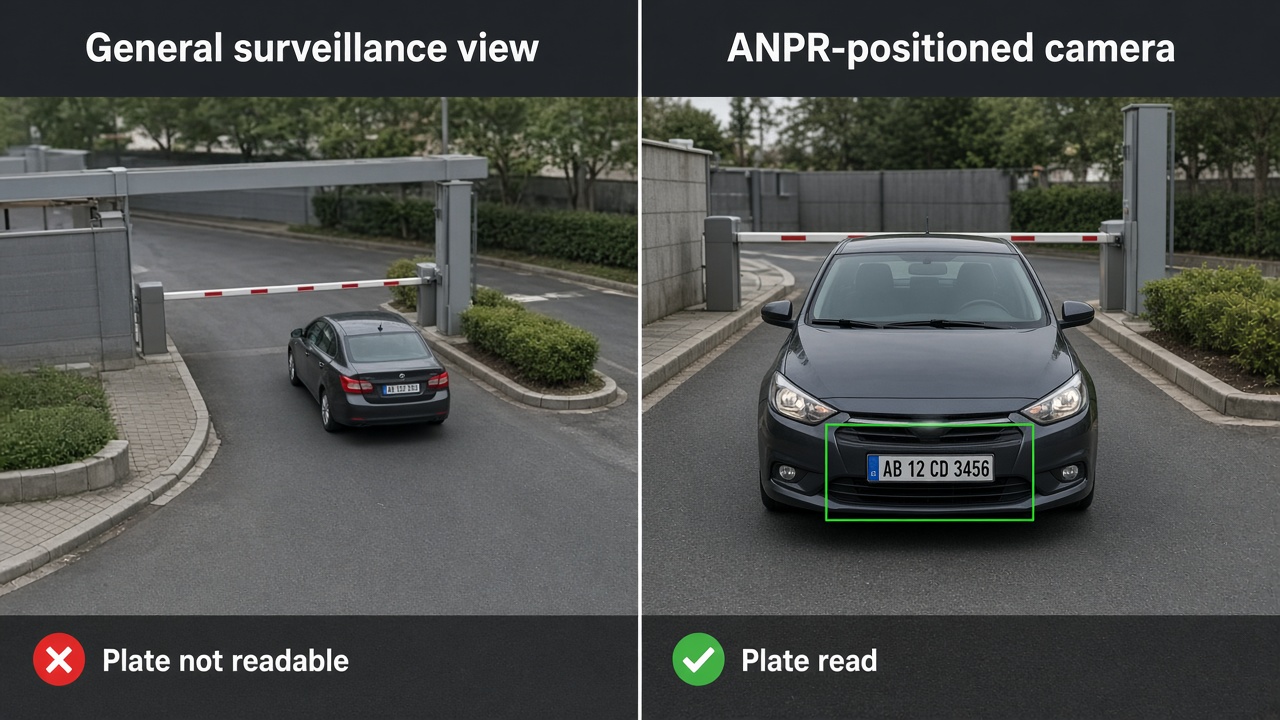
However, not every camera is suitable for every AI use case. For example, a camera positioned appropriately for general surveillance may not provide the image quality or angle required for reliable ANPR or face recognition.
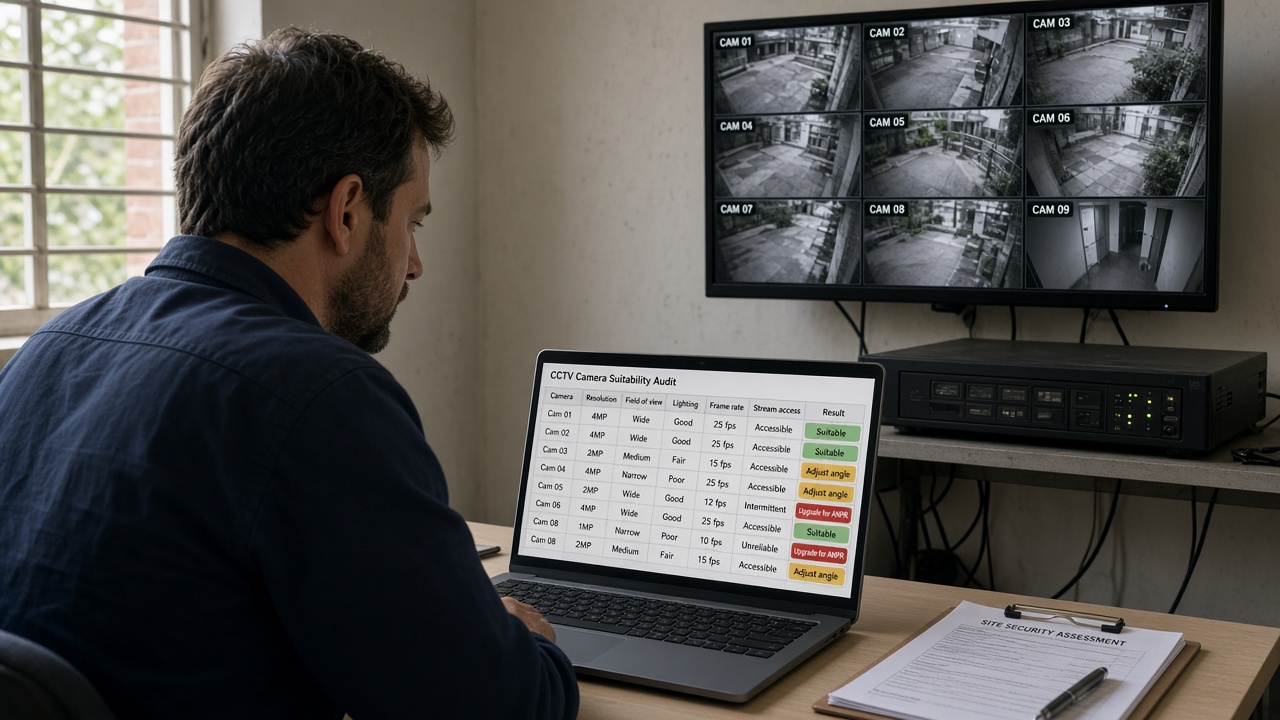
Engineer in a security room reviewing a CCTV camera suitability audit on a laptop, with each camera rated for resolution, field of view, lighting, frame rate and stream access and marked suitable, adjust angle or upgrade for ANPR, beside an older recorder and a camera grid monitor
Existing camera audit: which cameras are suitable, which need adjusting and which need upgrading for ANPR

MLT can evaluate the existing video infrastructure against the intended analytics before recommending upgrades.

Why Camera Placement Matters

AI Performance Starts With the Video

AI is only one part of a successful video analytics deployment. The quality of the input video strongly influences what can be detected reliably.
Important factors
Camera PositionThe field of view must match the intended analytics.
LightingLow light, glare, shadows and backlighting can affect detection.
ResolutionThe image must contain sufficient detail for the intended use case.
Camera AngleSome applications require specific viewing angles.
Scene ConditionsCrowding, occlusion, weather and environmental conditions can affect results.
ProcessingCompute must suit the number and complexity of analytics being performed.
Side-by-side views of the same parking barrier: a high, wide general surveillance camera where the number plate is too small to read, and a lower ANPR-positioned camera where the plate is large and read successfully
Same entry, different camera: a general surveillance view cannot read the plate, an ANPR-positioned camera can

This is why MLT approaches video intelligence as a system engineering problem, not simply an AI software installation.

Video Intelligence Architecture

A typical MLT deployment can be structured as:

From cameras to action
Cameras / Video SourcesExisting or new IP cameras
Video StreamLive feeds from each camera
Video ManagementStreams, recordings and monitoring
AI / Computer VisionDetection, classification and tracking
PeopleDetection & tracking
VehiclesDetection & ANPR
ObjectsConfigured objects
BehaviourLoitering, intrusion
TrafficViolations, speed
EventsLeft objects, zones
IntelligenceContext and meaning
Alerts / EvidenceNotifications, images and clips
Dashboard / Command CentreOperators see and verify
Action / IntegrationResponse and external systems

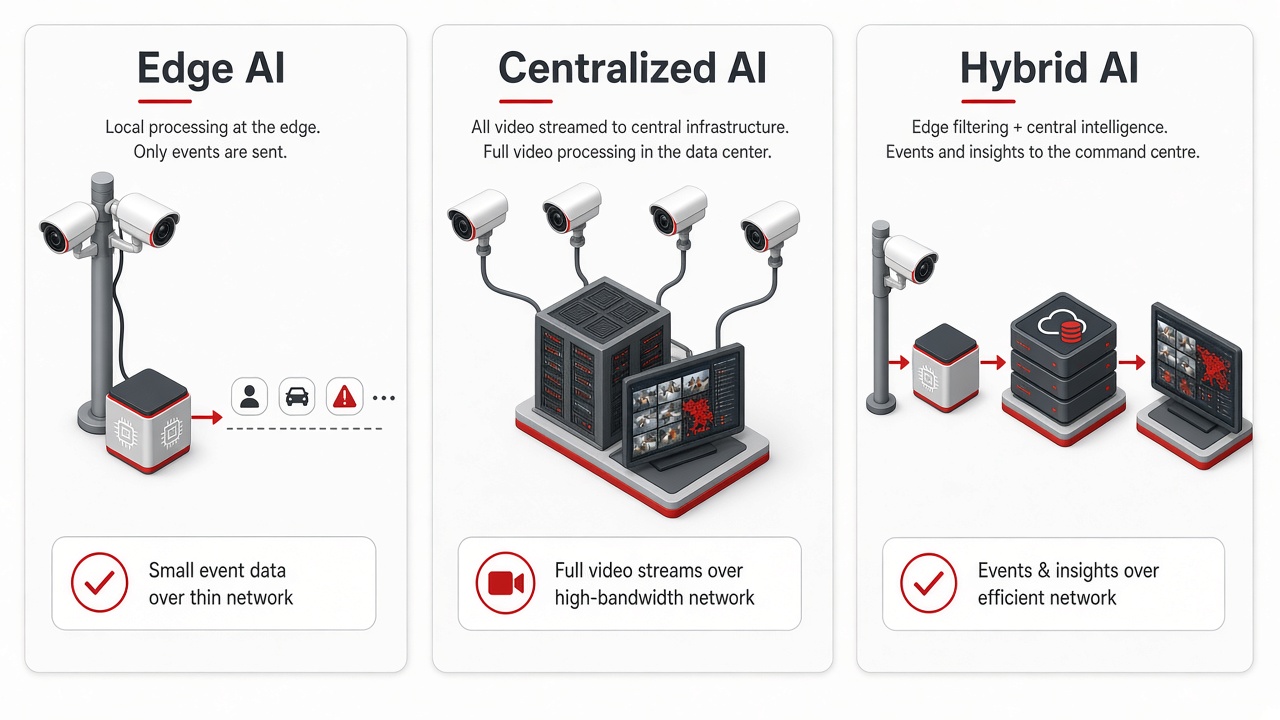
The architecture can be implemented using edge processing, centralized processing or a hybrid approach.

Edge, Centralized or Hybrid AI

Deploy Intelligence Where It Makes Sense

Edge AI

Video processing can occur closer to the cameras. Useful where:

  • Bandwidth is limited
  • Low latency is important
  • Local processing is preferred
  • Distributed locations require local intelligence
Centralized AI

Video streams or relevant data are processed centrally. Useful for:

  • Command centres
  • Centralized monitoring
  • Multi-location analytics
  • Unified event management
Hybrid AI

A combination of edge and centralized processing, balancing local processing with centralized intelligence.

  • Local detection at the edge
  • Central events & monitoring
Hybrid AI flow
1
CameraVideo source
2
Edge AILocal processing
3
Central PlatformEvents & data
4
Command CentreMonitoring & response
Illustration of three approaches: edge AI with processing beside the cameras and only events sent, centralized AI with full video streamed to a data centre, and hybrid AI from camera to edge box to central platform to command centre
Edge, centralized and hybrid: where video is processed and what travels over the network

The appropriate architecture depends on camera count, video resolution, analytics workload, network availability, latency requirements and infrastructure.

From Detection to Action

AI Is Most Valuable When It Connects to a Workflow

An AI model detecting an object is only the beginning. The operational value comes from what happens next.

Example — Security

1
Person DetectedAI detection
2
Restricted Zone EventRule triggered
3
AlertOperator notified
4
Operator VerificationVideo reviewed
5
Security ResponseTeam dispatched

Example — Traffic

1
Vehicle DetectedAI detection
2
Plate RecognizedANPR
3
Violation DetectedConfigured rule
4
Evidence CreatedImages & metadata
5
Authorized ReviewVerified by officials
6
Enforcement Workflowe.g. e-Challan

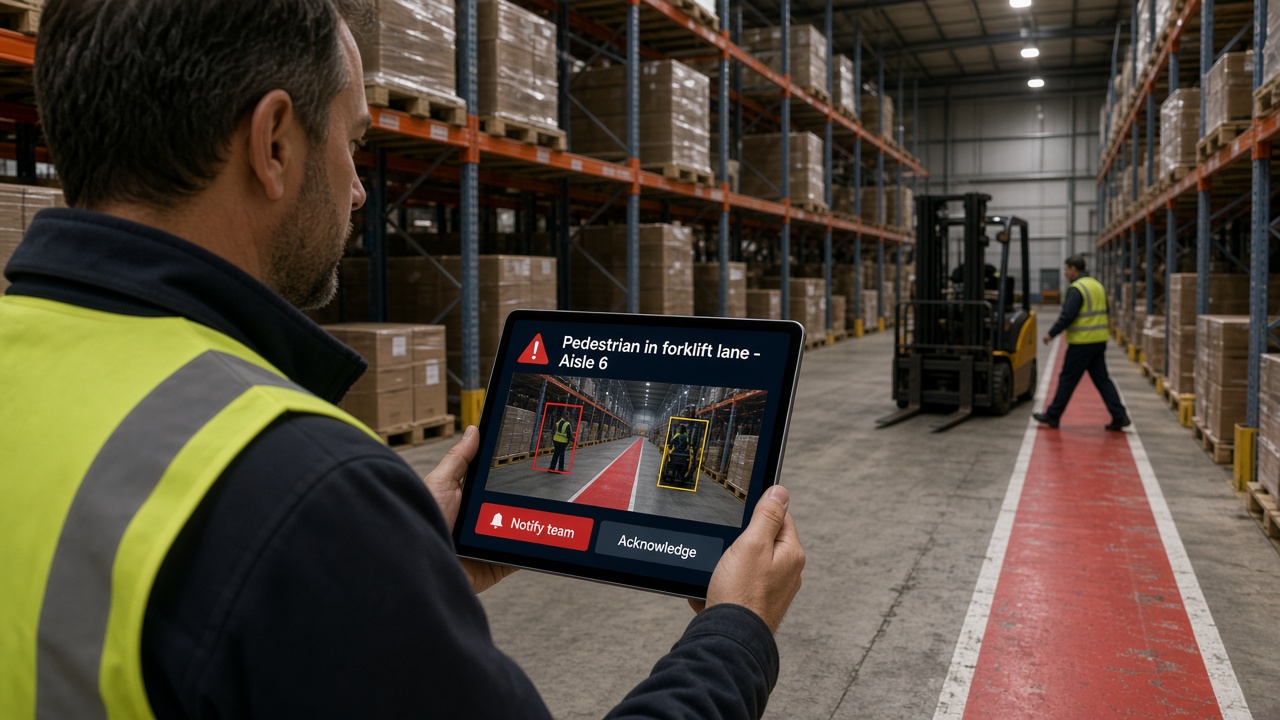
Example — Safety

1
Person / Event DetectedAI detection
2
Safety ConditionIdentified
3
AlertRaised
4
Supervisor NotifiedRight owner
5
Safety ResponseAction taken
Warehouse supervisor holding a tablet with an AI safety alert for a pedestrian in the forklift lane in aisle 6, with notify team and acknowledge buttons, while the forklift waits and the worker steps back into the walkway
Safety workflow: a pedestrian-in-forklift-lane alert reaches the supervisor, who notifies the team

This is where MLT’s AI capability moves from computer vision to operational intelligence.

Real-World Traffic Intelligence

AI Video Intelligence in the Field

MLT has applied its video intelligence capabilities through the TruSight platform in real traffic environments.

Deployment scale
32
Cameras · Theni District
44
Cameras · GD Naidu Flyover
10
Cameras · Kallakurichi–Salem

These deployments demonstrate how AI video intelligence can be connected to actual roadside infrastructure, networking, processing, monitoring and operational workflows.

View Traffic Case Studies →

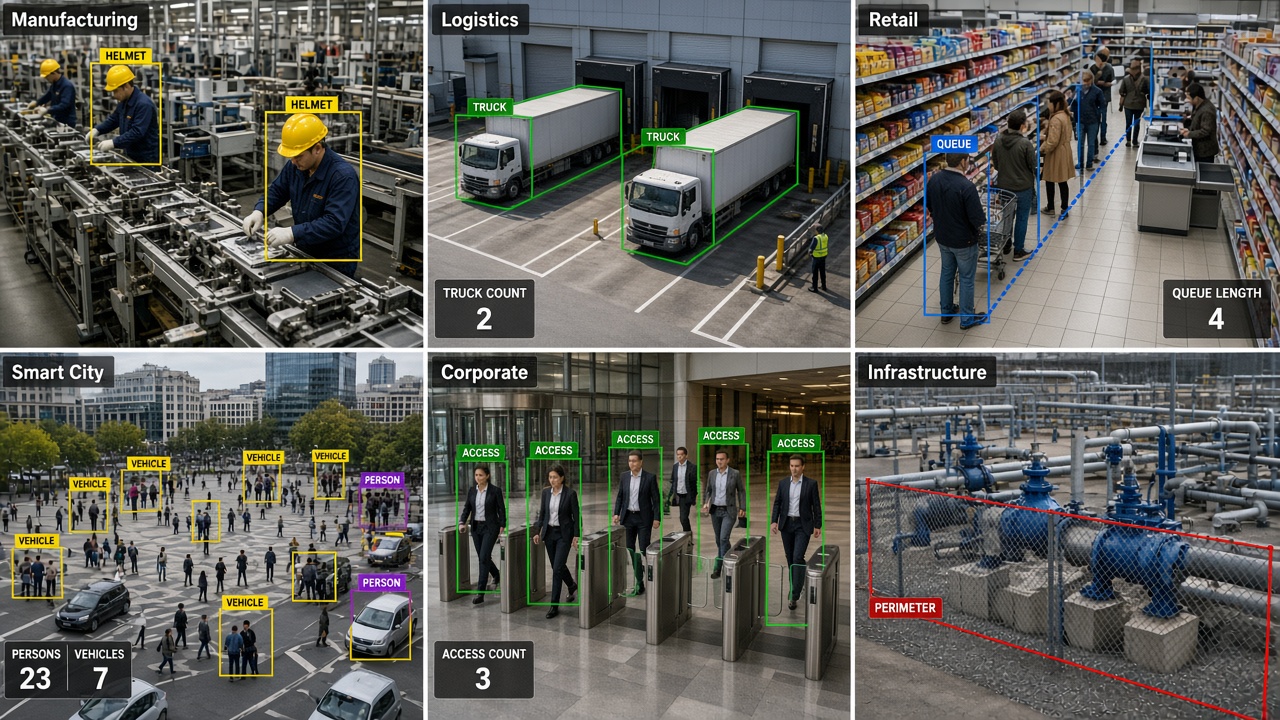
Beyond Traffic

Video Intelligence Across Industries

Manufacturing
  • Worker Safety
  • PPE Monitoring
  • Restricted Zones
  • Operational Monitoring
  • Object / Goods Detection
Logistics & Warehousing
  • Vehicle Monitoring
  • People Tracking
  • Goods Counting
  • Warehouse Operations
  • Security
Retail
  • Footfall
  • Occupancy
  • Customer Movement
  • Queue Monitoring
  • Security
Government & Smart Cities
  • Public-Space Monitoring
  • Traffic Intelligence
  • ANPR
  • Security
  • Command Centres
Corporate
  • Access Monitoring
  • Security
  • Occupancy
  • Workplace Analytics
Infrastructure
  • Perimeter Monitoring
  • Asset Protection
  • Remote Surveillance
  • Operational Monitoring
Collage of six camera views with AI overlays: helmet detection on a manufacturing line, truck counting at logistics docks, a retail queue counter, people and vehicles in a city square, access counting at corporate turnstiles and a perimeter line at an infrastructure valve yard
One capability, many industries: manufacturing, logistics, retail, smart city, corporate and infrastructure

The exact capabilities available depend on the application and deployment configuration.

Responsible AI & Video Analytics

Intelligence Requires Responsible Deployment

Video analytics can affect people, privacy and operational decisions. MLT’s approach is therefore based on defined use cases, appropriate system configuration, human oversight and responsible data handling.

NIST’s AI Risk Management Framework identifies trustworthy AI considerations including validity and reliability, safety, security and resilience, accountability and transparency, explainability, privacy enhancement and fairness.

Trustworthy AI considerations
Valid & ReliableWorks as intended
Safe, Secure & ResilientProtected & robust
Accountable & TransparentClear ownership
Privacy & FairnessExplainable & privacy-enhanced

For technologies such as face recognition, performance can vary with image quality, application context and demographic factors. NIST’s Face Recognition Technology Evaluation documents demographic differentials and the effects of image quality and other factors on recognition performance.
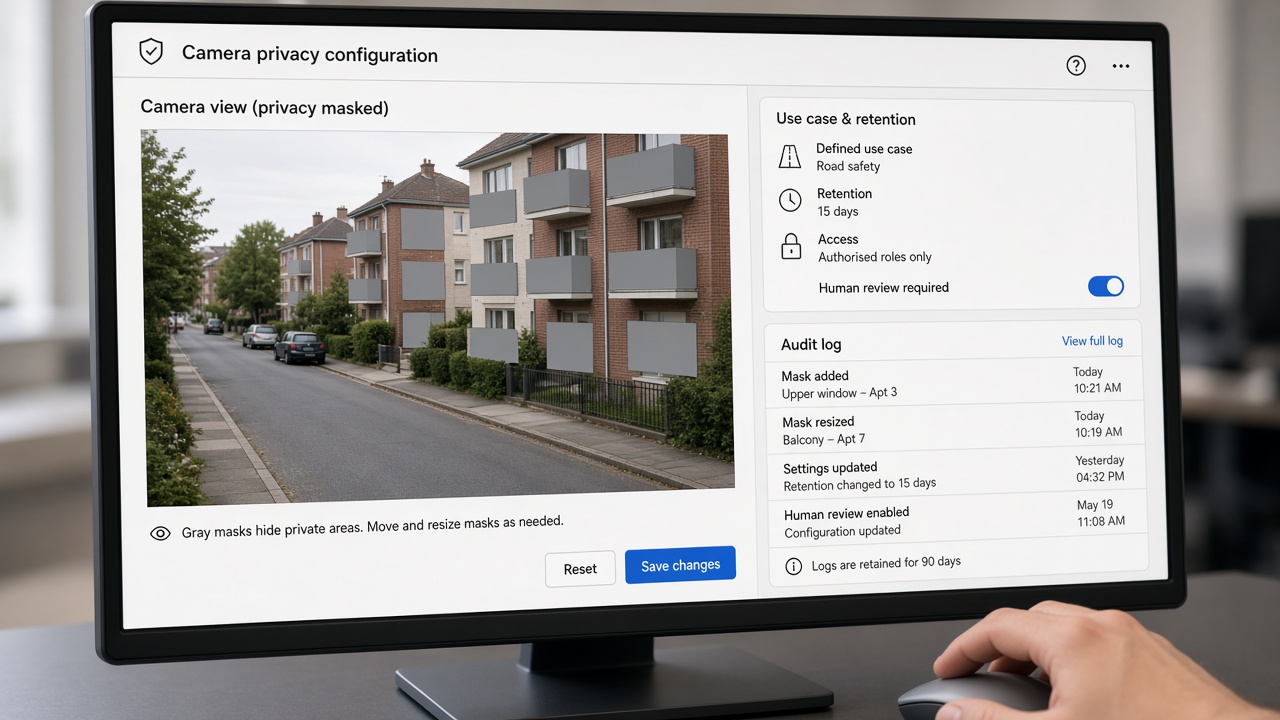
Camera privacy configuration screen with grey masks over the windows and balconies of apartments on a street view, a defined road safety use case, 15-day retention, authorised roles only, human review required and an audit log
Responsible configuration: privacy masks, a defined use case, limited retention, role-based access and an audit log
What MLT avoids
  1. “100% accurate AI surveillance.”
What MLT offers instead
  1. “AI analytics configured and evaluated for the intended environment and use case.”

This is more credible and more appropriate for enterprise and government deployments.

Video Interoperability

Work With Existing Video Ecosystems

Video infrastructure often includes cameras and systems from multiple manufacturers.

Standards such as ONVIF are designed to support interoperability between IP-based physical-security products. ONVIF profiles define specific sets of capabilities supported by conformant devices and clients.
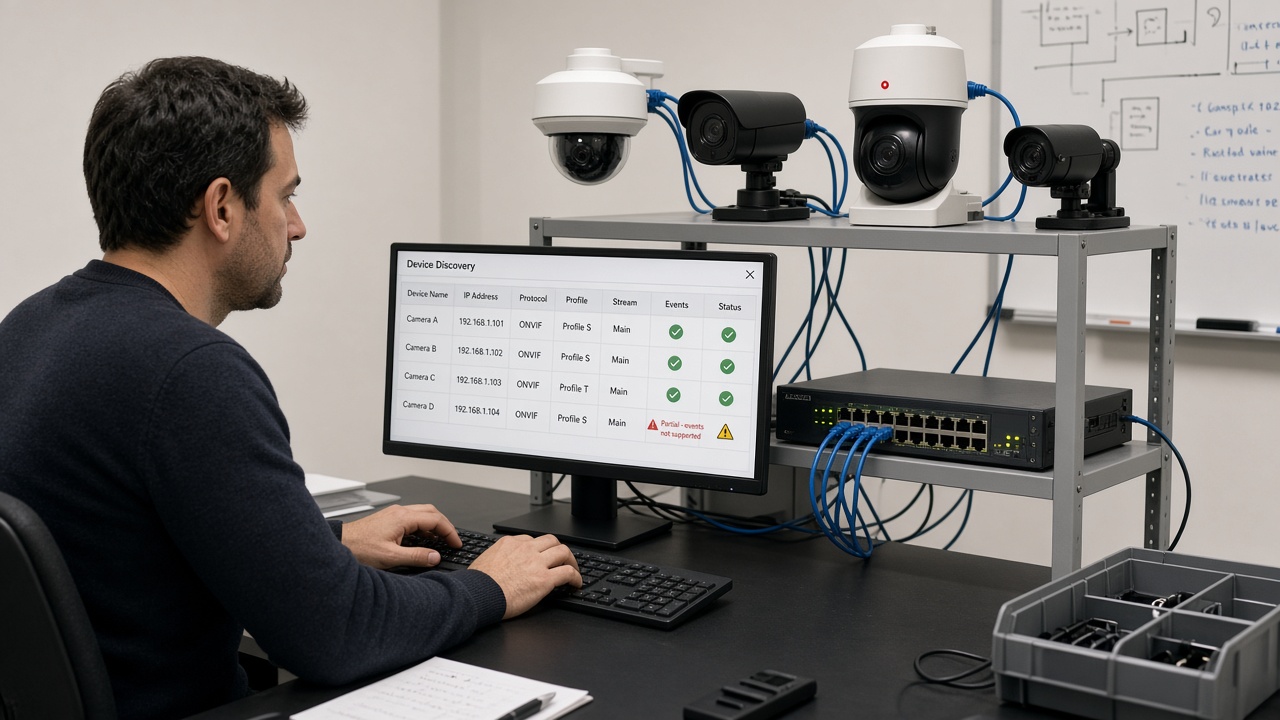
Engineer at an integration test bench with dome, bullet and PTZ cameras connected to a switch, reviewing a device discovery table of protocol, profile, stream and event support with one camera marked partial because events are not supported
Interoperability testing: each camera is checked for the streams and events the deployment needs

MLT can evaluate available camera and video interfaces and determine the appropriate integration approach for the intended deployment. MLT does not claim universal compatibility: actual interoperability depends on the camera, VMS, protocol and profile support, and required functionality.

Why Choose MLT for AI & Video Intelligence?

Technology That Connects AI to Real Operations

What MLT brings
AI FoundationDhurgAI provides the broader AI video analytics foundation.
Domain PlatformsTruSight applies video intelligence specifically to traffic management.
Real-World DeploymentImplemented in actual traffic and infrastructure environments.
System EngineeringCameras, networks, compute, storage, software and workflows, not just an AI model.
IntegrationDashboards, APIs, command centres and external systems.
Configurable IntelligenceAnalytics selected according to the actual operational requirement.
Human-Centred WorkflowsAI provides information; responsible personnel verify and decide.

Our AI & Video Intelligence Platforms

AI & Video Intelligence Solutions

Explore All AI & Video Solutions →

How MLT Approaches a Video Intelligence Project

From Use Case to Deployment
01
UnderstandDefine the operational problem and intended outcome
02
AssessCameras, infrastructure, connectivity & site conditions
03
DesignAI capabilities, processing architecture & integrations
04
ConfigureAnalytics and event workflows
05
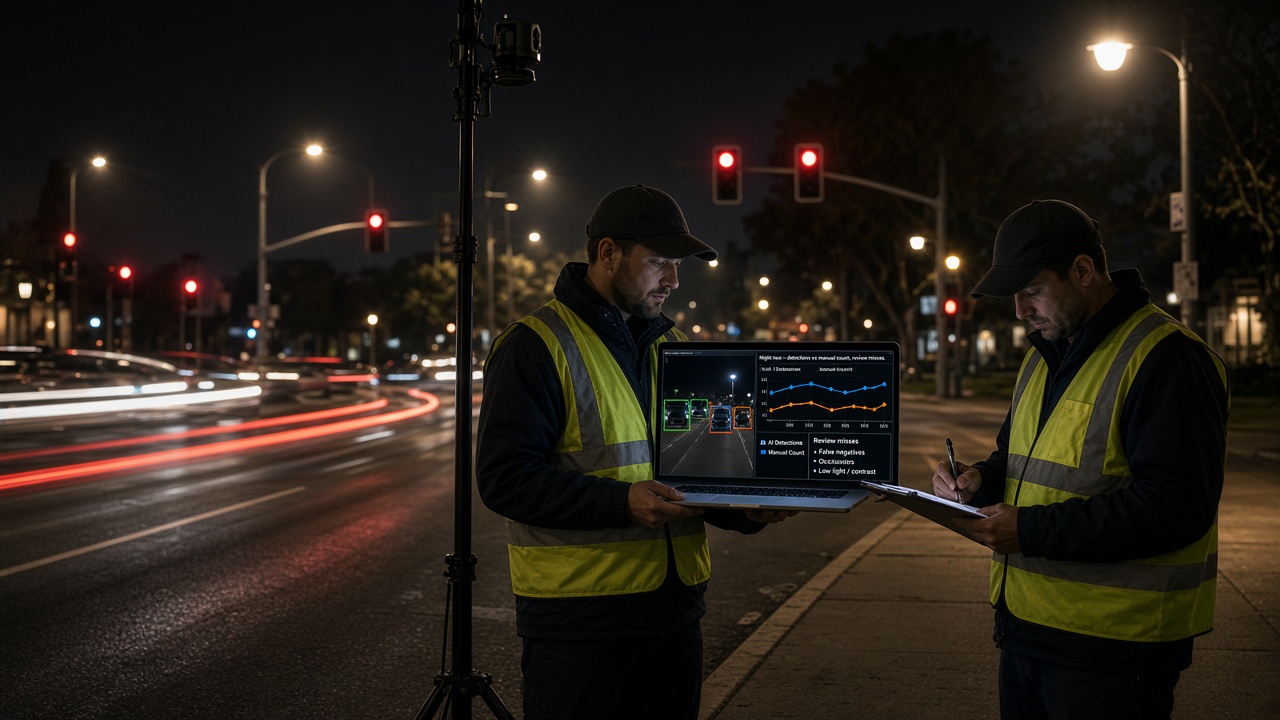
ValidateTest under real conditions
06
DeployAcross the selected locations
07
Monitor & ImproveRefine as requirements evolve
Two engineers in hi-vis vests at a city junction at night validating AI detections on a laptop against a manual count, with traffic light trails behind them
Validate: testing analytics under real night-time conditions before deployment

This approach is important because AI performance cannot be separated from the environment in which it is deployed.

Frequently Asked Questions

What is AI Video Intelligence?

AI Video Intelligence uses computer vision and artificial intelligence to analyse video and identify configured objects, events, behaviours or patterns, turning video into structured information.

Is AI Video Analytics the same as CCTV?

No. CCTV primarily captures and displays or records video. AI video analytics adds an intelligence layer that can analyse video and identify configured events.

Can AI analytics work with existing CCTV?

Potentially. Existing cameras can be evaluated based on resolution, positioning, lighting, video access, connectivity and the intended analytics. Not every camera will be suitable for every use case.

What is the difference between VMS and AI Video Analytics?

A VMS primarily manages video infrastructure, cameras, recordings and monitoring. AI video analytics analyses video to generate structured events and intelligence. The two can work together.

What is the difference between DhurgAI and TruSight?

DhurgAI is MLT’s broader AI video analytics platform. TruSight is a traffic-focused platform built around AI video intelligence, vehicle analytics, ANPR, traffic violations, speed intelligence and traffic workflows.

Can one camera support multiple AI analytics?

Potentially, yes. The actual combination depends on the camera view, image quality, scene complexity and available processing capacity.

Does AI replace human monitoring?

No. AI can automate defined monitoring and alerting tasks, but human personnel remain important for verification, context and appropriate response, especially in safety, security and enforcement environments.

Is face recognition always accurate?

No AI recognition system should be described as universally accurate. Performance depends on the algorithm, image quality, environment, application and other factors. NIST evaluations demonstrate that face-recognition performance can vary across conditions and demographic groups.

Can MLT integrate cameras from different manufacturers?

Integration depends on the cameras, protocols, interfaces and required functionality. Standards such as ONVIF are designed to support interoperability between conformant IP video products.

Build Intelligence Around Your Video Infrastructure

Your cameras already see a lot. The next question is: what can they understand?

MLT combines AI, computer vision, video management and domain-specific intelligence to turn video infrastructure into an operational intelligence layer.

See. Understand. Detect. Respond.

Your cameras already see a lot

Find out what they can understand. Explore our AI video analytics and traffic intelligence platforms, or talk to MLT about your video infrastructure.

About Mountain Lamp Technologies

Mountain Lamp Technologies Pvt. Ltd. develops AI, IoT and software technology for real-world operational environments.

Its technology ecosystem includes DhurgAI for AI Video Analytics, TruSight for Intelligent Traffic Management, iSenzoT for IoT Intelligence and domain-specific software and infrastructure solutions.

MLT combines computer vision, artificial intelligence, IoT, software engineering and system integration to build technology that connects physical environments with digital intelligence.

Explore Mountain Lamp Technologies →

Back to all solutions
Get in touch

Ready to turn your video into intelligence?

Share a few details about your cameras, sites and the events you need to detect, and our AI team will help design the right video intelligence approach.

No pitch decks. Just a hello — we’ll take it from there.